Plates too pretty to eat off, & the stories behind them.
The Dainty Dish is your guide to building a collection of tableware worth keeping, using, and passing down. From vintage finds to timeless pieces I believe every home should own, we’re here to make decorating with dishes feel a little more personal—and a lot more fun. Think of me as your friend, just with very strong opinions about dishes. Come find something worth bringing home!
Free letters, a few times a month. Unsubscribe anytime.
What you'll find here
Set a table that tells a story
i
Pieces Worth Collecting
Vintage & antique tableware that actually holds its value.
ii
Estate Sale Finds
“DO YOU KNOW HOW MUCH THAT’S WORTH??”
iii
Styling & Tablescapes
Plate walls, seasonal tables, and mixing highs with lows.
iv
The Story Behind the Dish
A monthly deep-dive into the most coveted china houses.
I'm originally from Mobile, Alabama, and I truly believe my southern heritage fuels my passion for things that feel timeless and beautiful. While some people come home from antique stores with furniture or artwork, I somehow leave with another stack of floral dessert plates that I definitely didn't need… but absolutely couldn't leave behind.
“In the south, if someone gets married, you MUST be drinking out of a silver chalice, or your marriage might be doomed.”
Now in Newport Beach, I'm sharing my opinions on EVERYTHING: what to collect, what it's worth, and how to actually use it.
For the friend who drags you to every estate sale. Delivered as a beautiful PDF.
Printable PDF guide
The Holiday Table Playbook
$18
Four complete holiday tables (Thanksgiving, Friendsgiving, Christmas Dinner and New Year's Eve) with palettes, the exact layers, budget swaps, place-setting diagrams and a three-week countdown so the day-of is calm (and cute).
New · Printable PDF guide
What's That For? Your Serving Utensil Guide
$14
Ever found a gorgeous silver piece at an estate sale and thought, what on earth is that for? 32 serving pieces identified, what to serve with them today, a price cheat sheet so you never overpay, and how to keep it all shining.
This guide contains affiliate links. If you buy through them, The Dainty Dish may earn a small commission at no extra cost to you.
Pull up a chair
Shopping with a friend who texts, “You HAVE to see what I found.”
Estate sale finds, the stories behind iconic china, and the pieces worth your money — delivered free, a few times a month.
Free forever. Unsubscribe anytime.
Guides & Playbooks
Little guides, big finds
Everything I've learned flipping plates at estate sales and setting holiday tables, in beautiful, printable guides.
Printable PDF guide
The Holiday Table Playbook
$18
Four complete holiday tables (Thanksgiving, Friendsgiving, Christmas Dinner and New Year's Eve) with palettes, the exact layers, budget swaps, place-setting diagrams and a three-week countdown so the day-of is calm (and cute).
4 complete tablescape formulas
Formal, casual & dessert place-setting diagrams
Splurge-or-save picks with shop links
Signature sips for every table
3-week hosting countdown
Printable buffet labels & shopping list
New · Printable PDF guide
What's That For? Your Serving Utensil Guide
$14
Ever found a gorgeous silver piece at an estate sale and thought, what on earth is that for? 32 serving pieces identified, what to serve with them today, a price cheat sheet so you never overpay, and how to keep it all shining.
32 serving pieces identified, with rarity ratings
A menu matchmaker and buffet diagram
Sterling or silver-plate: the ten-second test
What to pay: a price cheat sheet
My silver care kit, with shop links
Printable buffet tags & a Name-that-piece quiz
Printable PDF guide
The Backstamp & Hallmark Field Guide
Coming soon
Flip the plate, read the mark, know what you've got. A pocket-ready guide to silver hallmarks and china backstamps: sterling vs. plate, how to date a piece from its stamp, the marks of the great houses, and a condition checklist so you never overpay at an estate sale again.
Sterling vs. silver-plate marks, decoded
How to date china from the backstamp
Marks of Ginori, Bordallo, Herend, Spode & more
The 60-second estate sale condition check
Printable wallet cheat sheet
Best value
The Collector's Bundle: coming soon
The Field Guide for the hunt, the Playbook for the table. Both guides together, arriving soon. Makes a lovely gift, too.
Questions
Good to know
How do I get my guide?
Click Buy now to check out securely through Gumroad. Your PDF download link arrives instantly by email, and it's yours to keep, print, and re-read every season.
Can I print it?
Yes. Every guide is designed to print beautifully on standard letter paper, and the printables (buffet labels and tags) look best on white cardstock.
Can I give it as a gift?
Absolutely. Buy it, forward the download email, and you're the most thoughtful guest at the party.
Are subscribers getting a discount?
Newsletter subscribers get early access and occasional member-only codes. Join the table below.
Pull up a chair
Shopping with a friend who texts, “You HAVE to see what I found.”
Estate sale finds, the stories behind iconic china, and the pieces worth your money — delivered free, a few times a month.
Free forever. Unsubscribe anytime.
Style My Table
What's your table personality?
Four questions. Two minutes. One very beautiful, very shoppable table.
Question 1 of 4
Your dream dinner party is…
Question 2 of 4
Pick a palette.
Question 3 of 4
At an estate sale, you beeline for…
Question 4 of 4
Your hosting motto?
Your table personality
The Heritage Hostess
English country, turned up for the holidays
Brown transferware, burgundy linens, a turkey platter that's older than you. Your table feels like a Gilmore Girls Thanksgiving: layered, warm, and a little bit Ralph Lauren. You mix patterns fearlessly and never, ever use paper napkins.
Get your personality's palette, layering formula and seasonal picks in your inbox.
Your table personality
The Florentine
Hand-painted, a little extra, entirely Italian
You'd serve takeout on Ginori if nobody was watching (we are watching, and we approve). Rich color, graphic pattern, and a strong opinion about espresso cups. Your table is a long lunch in Tuscany.
Get your personality's palette, layering formula and seasonal picks in your inbox.
Your table personality
The Garden Party Girl
Cabbageware, majolica & a little whimsy
You have never met a vegetable-shaped dish you didn't love. Greens, creams, and something unexpected on every table, like a mouse guarding the cheese. Your plate wall is already legendary.
Get your personality's palette, layering formula and seasonal picks in your inbox.
Your table personality
The Silver Belle
Southern manners, polished to a shine
Your grandmother's silver is not for looking at; it's for using. Drinks go on a tray, candles go in candlesticks, and the chalice at the wedding is non-negotiable. Your table says: we do things properly here.
Get your personality's palette, layering formula and seasonal picks in your inbox.
Pull up a chair
Shopping with a friend who texts, “You HAVE to see what I found.”
Estate sale finds, the stories behind iconic china, and the pieces worth your money — delivered free, a few times a month.
Free forever. Unsubscribe anytime.
Partnerships
Work with me
The Dainty Dish is where women who collect, host and decorate come for the pieces worth buying, and the stories that make them worth keeping.
Hi, I'm Morgan
A trusted voice on the table
Southern-raised, Newport Beach-based, and a little obsessed with vintage china and silver. I write like a friend texting from the estate sale: honest opinions, real history, and pieces I'd actually buy. My readers trust my taste, and they shop it.
8Long-form stories
1,065Avg. words per story
MonthlyStory Behind the Dish
2026Est. Newport Beach
Who reads The Dainty Dish
She sets the table for everyone
The Collector
Hunts estate sales, knows her Spode from her Wedgwood, and wants to know what it's worth.
The Hostess
Hosts the holidays, the showers and the book club, and invests in pieces that last.
The Decorator
Plate walls, open shelving and heirlooms on display. Her home tells a story.
Ways to partner
Partnership opportunities
01
Sponsored Story
A dedicated, long-form post built around your brand: styled, photographed and written in Morgan's voice.
02
The Story Behind the Dish
Your house's history, craft and modern revival, told in our signature monthly series.
03
Gift Guide Placement
Featured placement in the Holiday Gift Guide, on the site and in the newsletter.
04
Newsletter Feature
A dedicated mention with image and link inside an upcoming letter.
05
Tablescape Styling
Your pieces styled into a seasonal table, with images you can license for your own channels.
06
Affiliate & Ambassador
Ongoing inclusion in Shop My Finds and seasonal round-ups on a commission basis.
Brands featured in the Journal
Ginori 1735
Bordallo Pinheiro
Juliska
Spode
Williams Sonoma
Martha Stewart
Neiman Marcus
Chairish
1stDibs
Wright's
Bloomingdale's
Pottery Barn
West Elm
Quince
Dillard's
Let's talk
Start a conversation
Pull up a chair
Shopping with a friend who texts, “You HAVE to see what I found.”
Estate sale finds, the stories behind iconic china, and the pieces worth your money — delivered free, a few times a month.
Free forever. Unsubscribe anytime.
The Journal
Every Dish, Every Story
Vintage finds, table styling, and the history behind the china everyone is suddenly collecting again.
Your go-to guide for curating a magazine-worthy plate wall that will send AD knocking at your door.
By Morgan Dixon August 7, 2026 · 6 min read
This post contains affiliate links. If you buy through them, The Dainty Dish may earn a small commission at no extra cost to you.
Have you ever seen a perfectly executed plate wall and thought “how do I copy and paste this into my home?” Maybe you felt inspired but then got discouraged because it feels like daunting task, or maybe you don’t know where to start. In my opinion, there is nothing more nostalgic, classic, and inviting than a perfectly curated wall of plates. Whether over a breakfast nook, console table, or even a hood range in your kitchen, anything goes. I’ve even seen some people put them in their bathrooms, laundry rooms, I mean really, there is no wrong answer here! Aside from creating a beautiful moment, our spaces should be filled with reminders of what makes us feel represented or tell a story that is thoughtfully curated over time, or maybe sourced from our favorite place to travel, and this is an excellent way for that story to shine through.
THE INSPO
Featured in AD in April of 2026, homeowners Anne Crawford and Dudley DeZonia reimagined their stunning Ojai, CA residence with the perfect plate wall over their breakfast table, featuring the owners’ collection of trompe l’oeil plates. Full article is linked on the image.
There’s a reason the concept of hanging plates goes back as far as seventeenth century. This concept was born in countries such as France and England, and by hanging your plate, it meant you were effortlessly posh, well-traveled, and of course, wealthy. While beautiful porcelain pieces worthy of displaying are much more accessible in modern day, at some point, this timeless tradition found its way back in the homes of many. I’m doing the Lord’s work and breaking it all down for you so you don’t have to!
FULL-PROOF RECIPE TO A PERFECT PLATE WALL
Color or Theme Coordination: It’s important to start with a cohesive color palette that is complimentary of the other plates of your choosing, as well as the space in which you’re showcasing your plate wall. While the designs do not need to match (it is usually preferred if they don’t) it’s important to choose colors that tie in one another so everything looks intentional. Alternatively, if the colors aren’t as married but the theme of the plates are aligned (exhibit A in the image below), this is a great way to make things feel cohesive. Another tip is to mix in a few basic colors and patterns as anchor pieces to the eye, so the fun, bolder pieces have an opportunity to stand out. Just like in any relationship, you need an Alpha and a Beta - it’s called balance people! And let’s remember, there is a fine line between cohesive and CRAZY. On the other hand, unless you’re doing an all white design (which is an absolute yes in my book), I would highly recommend having at least two to three colors in the mix for added dimension.
This design features what appear to be Henriot Quimper plates which are hand-painted and originating in Brittany, France.
Mixing Sizes: This might be the most important step. Using only one size can make the design feel flat and boring. It’s important to utilize multiple sizes in your design to add in layers of interest. Sizes can range from saucer plates, salad plates, dinner plates, chargers, platters, oyster plates, and even oversized trays or baskets. While there’s no exact rule book, these variations together create a full visual look that is hard to accomplish with a singular size. I do feel it’s important to select one or two “anchor pieces” that the smaller items orbit around. Ideally, you want a larger piece to ground the design and create a nice focal point.
This array features a Bordallo Pinheiro platter as the anchor piece along with Juliska “Country Estate” dinner plates, a Spode platter and other english blue and white plates.
Spacing: Ok I take my last statement back. THIS STEP is THE most important. If you space things out too far, it feels disconnected. If you space them too close together, it feels cluttered and will likely be an eyesore. Consistency is key (especially when it comes to plate hanging) so it is recommended to space each plate 2-3 inches apart depending on the size. For smaller plates, they can be closer together so long as it has a consistent look throughout. Another pro tip: if your design is not in a straight line (which is CHIC and allows for a lot more opportunity real-estate wise) decide on a shape or direction for your plates to add a sense of structure to the look. Examples of this are a soft oval shape, an asymmetrical cluster, or circular design. Plate walls do not always have to be a large assortment. You can also accomplish a beautiful more understatement touch by framing them around a sconce or art piece. These plates in below’s photo do a fabulous job of nicely accenting the statement piece (art, mirror, sconce, etc.) without overpowering it.
While I’m not familiar with who makes these plates, this color combo is actually insane and don’t even get me started on this wallpaper... NO NOTES.
Mixing Eras: As we discussed earlier on, it is important to include pieces that are interesting, unique, and maybe represent a fond memory or place that you want to travel back to mentally every time you see it. That said, there may be an array of styles that you love that maybe you’re afraid won’t mesh together. Don’t be afraid to mix pieces of different time periods or places. If you’re lucky enough to have sourced a plate from France that has a bright floral pattern, or maybe you inherited your grandmother’s Spode platter, both pieces deserve their moment to shine, and with the right pieces supporting one another, they can coexist and create something truly unique and beautiful. Your assortment can include antique finds, heirlooms, travel pieces, and modern ceramics. The key is to make it look curated over time and unique to YOU. You want to avoid looking like you purchased the same items in one afternoon from the same place. (I am guilty of this every time I walk into HomeGoods, so TBH I’m not judging).
A collected wall of antique and vintage majolica and transferware plates, each one a tiny work of art, gathered around an ornate gilt mirror, which is truly the cherry on top.
Go All White: Honorary mention is the all white plate wall. She’s timeless, she’s sophisticated, and she fits right in no matter what is going on around her. We love her, that’s all.
If Josh Young isn't on your radar yet, let this photo be your introduction. His eye for design is nothing short of extraordinary, and his Instagram is full of endless inspiration!
Using the Right Tools: You’ll want to get plate hangers, linked below. These babies are a life saver, super inexpensive and can be found at your local hardware store or on Amazon. It’s important to get plate hangers with protective plastic ends at the tip for the part that will be in direct contact with the edge of the plate. You don’t want your plate to rub against a metal tip as it could chip the porcelain! Safety first ladies. Another amazing hack for a single plate display that doesn’t involve any work is to have plate stand. This is a very subtle, low effort way to incorporate plates throughout your home that still allow for pops of color, texture, and most importantly, a conversation piece. Another practical tipbefore you grab the hammer: lay your arrangement out on the floor first. It's the easiest way to experiment with spacing, shapes, and balance before committing to your wall.
The exact plate hangers I use linked here. *contains Amazon affiliate linksThis gorgeous wood plate stand is a real step up from the cheap plastic ones. Your plate deserves better! *contains Amazon affiliate links
IF YOU’RE LUCKY ENOUGH TO HAVE WALL TO WALL SHELVING
If hanging things overwhelm you, you’re not alone. There’s a cheat code to mastering the feel of a plate wall that doesn’t require a nail and hammer so long as you have the square footage to accommodate it - and if you do - how does it feel to be God’s favorite??? If you’ve seen Something’s Gotta Give (my absolute favorite Nancy Meyers film) then you’ve probably seen the picturesque dining room in her Hamptons home that showcased a wall of shelving. This is perfect for plate styling AND perfectly appropriate for a dining room, since you can actually USE THEM! Unlike a standard plate wall with hanging items, this allows for styling functional items such as a soup tureen, punch bowl, or cake plate, because let’s be honest, the more the merrier.
Bury me in this dining room!!!!!
I hope you found this guide helpful and that it gives you the confidence to start your own plate wall! If there’s one thing I hope you take away, it’s this: don’t get caught up in making it perfect. A plate wall isn’t about flawless symmetry or following a formula, (if you’re OCD like me, I know it may be hard to stomach that) but truthfully, it’s about telling your story. Whether your collection is made up of treasured family heirlooms, estate sale finds, vacation souvenirs, or that one plate you simply couldn’t leave behind, each piece adds another layer of meaning. The most beautiful plate walls aren’t necessarily the most expensive or perfectly coordinated, they’re the ones that reflect the people who created them.
Specifically, silver plated versus real sterling silver. The difference in longevity of the pieces, and why real silver holds so much more value.
By Morgan Dixon July 14, 2026 · 5 min read
This post contains affiliate links. If you buy through them, The Dainty Dish may earn a small commission at no extra cost to you.
To start, you may be thinking, is there a difference? What is silver-plated and is it considered a bad thing? The answer is of course, no! Silver-plated items consist of a base metal (like copper, brass, or nickel) with a thin layer of silver fused onto the surface. In contrast, solid or sterling silver consists of the same precious metal throughout. Now let’s get into it!
Here are the distinctions and tell-tale signs between silver plating and solid silver, because knowledge is power:
Solid sterling silver is typically stamped with “925” or the word “STERLING” and it’s very obvious because its heavy AF compared to silver-plated items. Plated silver is often stamped with initials indicating the plating method or base metal, such as EP (Electroplated), EPNS (Electroplated Nickel Silver), IS (International Silver), or “quadruple plate”
Wear and Tear: Because the silver layer is extremely thin, plated items will eventually show the base metal underneath, particularly on edges or areas of frequent friction. Solid silver does not rub off or change color (even when it looks tarnished, just do a simple polish and you’re good to go)
In my opinion, you can totally get away utilizing silver-plated pieces in place of sterling silver for ANY ITEMS that are purely decorative or only used on special occasions when the people you want to impress come over, which lets be honest, is probably only on the holidays. You just want to limit use with silver plated pieces since they are prone to wear over time and expose the base metal as opposed to sterling silver. Although these don’t really hold value like real silver, the aesthetic is the same and can save you major bucks. And if someone comes over and starts picking up your items to feel the weight and determine if they’re real or not… are they really your friend?
Also, this immediately makes me think of the Bridesmaids scene where Melissa McCarthy casually lifts the couch in the bridal shop and says, “Oh, that’s nice.” LOL.
Below are a few silver plated pieces I’m DYING for that are effortlessly timeless and would work in any space.
A simple silver tray can do wonders when hosting or bring any table-top to life for daily decorum. Next time you have guests over, place their drinks on the tray to make things feel more elevated and intentional. This image contains affiliate links.
Another piece that comes to mind is inspired by Ina Garten (my forever inspo and the QUEEN). She has a stack of what I can only assume are real silver condiment bowls in her kitchen, and somehow they make every dish she serves look even more beautiful. If you’re an Ina fan, you know her signature style: a simple white platter or wooden board paired with a few classic silver accents. It’s understated, effortless, and of course,“fabulous!”
My favorite thing is mixing highs and lows or "fancy" with casual, and these little bowls do exactly that. They instantly elevate everything from weeknight snacks to dinner parties, making them one of those serveware staples you'll reach for again and again.... if you happen to find a vintage version in an antique shop, a mini Paul Revere footed bowl would be an amazing alternative. I currently have one and use it to display garlic! This image contains affiliate links.
For best practices on tips for cleaning, I recommend using the foil trick (IYKYK) or alternatively, the OG Wright’s silver cream. This stuff actually works miracles and I use it for both silver plated and real silver pieces. It gives a gorgeous, silver shine with very minimal effort.
When it comes to genuine sterling silver, you truly can’t go wrong investing in these pieces. With proper care, they can last for generations and become timeless statement pieces that you can one day pass down to your children. I feel like heirlooms are something we’ve slowly stopped thinking about as a younger generation because we are only focused in the “now”, but there is something so special about owning pieces that carry a story. They become a beautiful way to continue your family’s legacy, and a sweet reminder that even after someone is gone, we can still hold onto little pieces of them and the memories they leave behind. Okay, that’s enough sappiness for one day.
FUN FACT - Real silver, whether in bullion (bars/coins), vintage flatware, or .925 sterling silver, always retains a baseline “melt value” tied to the daily global commodities market, no matter the condition of the item. This is the beauty in real, tangible assets. If you happened to find a 3-Piece Tea Set (Teapot, Sugar Bowl, Creamer) in your grandmother’s home or scored at an estate sale, these sets typically weigh 900 to 1,500 grams. With today’s “melt value” this would mean your set is worth between $1,500 and $2,600. So, next time you’re on the fence about your next antique purchase, just remember to view it as an investment! The best shopping hack.
In case I’ve influenced you and you now find yourself in the market, some iconic and highly reputable brands of real silver include -
Gorham(American, est. 1831) Known for exceptional craftsmanship and timeless sterling silver. Did you know that multiple U.S. Presidents and First Ladies commissioned and utilized Gorham’s designs for the White House???
Reed & Barton(American, est. 1824) Beloved for elegant flatware and serving pieces.
Tiffany & Co.(American, est. 1837) One of the most recognizable names in luxury silver (obviously).
Christofle(French, est. 1830) Renowned for sophisticated French silver and silver plate.
Birks(Canadian, est. 1879) A favorite for beautifully crafted sterling silver with classic styling.
If I’m being completely honest, when it comes to antique sterling silver (especially trays) I almost always gravitate toward the simpler pieces. The heavily engraved styles and patterns can sometimes feel a bit busy to me, whereas clean, classic lines have a timeless quality that never seems to go out of style. If you’re investing in your first silver piece, I’d recommend choosing something understated and classic. It’s incredibly versatile and will likely be a piece you reach for again and again, and this way you won’t feel tied to a particular era in time.
I hope this was insightful and if you read this entire thing, congratulations! You’re just as obsessed with silver as I am, and I don’t think there’s anything wrong with that. For centuries, silver was more than just something you set the table with, it was a family’s legacy, a symbol of prosperity, and often an heirloom passed from one generation to the next. Today, we have endless options for decorating our homes (and yes, I will happily browse every aisle of TJ Maxx), but I still believe there’s something irreplaceable about finding pieces with history and true meaning. They have a way of making everyday rituals feel a little more intentional and a LOT more fabulous!
Each month, we're exploring the stories behind the most sought-after tableware brands of the moment - from their rich histories to the viral trends fueling their modern-day revival.
By Morgan Dixon August 25, 2026 · 5 min read
This post contains affiliate links. If you buy through them, The Dainty Dish may earn a small commission at no extra cost to you.
While the brand name Bordallo Pinheiro might not mean anything to you, you are definitely aware of their VERY distinct line of China, even if you don’t realize it. This is the designer behind the earliest and most influential cabbage plates. Yes, THE cabbage plates that have continued to dominate the homes of many since the early 1960s, and have found their way back to peak relevance with different variations popping up in mass retailers such as Target, Hobby Lobby, and so on. The cabbage plate remains undeniably unique and highly sought-after. But what if I told you this line of infamous china started as a joke? Let’s discuss.
The History
This iconic brand dates back to 1884 when Portuguese artist Rafael Bordalo Pinheiro founded a ceramics factory in Caldas da Rainha, just north of Lisbon, Portugal. The Fábrica de Faianças das Caldas da Rainha (a mouthful) was born in efforts to merge local pottery traditions with artistic innovation, and this factory still remains in business today! Ironically, his designs started as satirical and were created out of pure wit to poke fun at aristocratic, stiff, overly formal dining traditions that took place at the turn of the century.
At the time, upper class dining culture had strict ideas of what was considered proper. By choosing the cabbage, (a very cheap and simple vegetable) and turning it into porcelain, it was Bordallo’s quirky way of bringing this common, humble vegetable into the homes and on the tables of the elite. His vision became fashionable, highly collected and widely produced by he very people he was making fun of (We LOVE this for him!) But, how did this design reach the hands of many here in the States you ask? A woman named Dodie Thayer entered the chat.
In the 1960s, Palm Beach ceramic artist Dodie Thayer, infamously named “The Pottery Queen of Palm Beach” began hand crafting lettuce ware in America, making this design highly favored by some of the most influential people in the world. Icons like Frank Sinatra and Jackie Kennedy, to name a few, began collecting her pieces and initiated the craze that we still take part in to this day. And although Dodie made her mark with lettuce rather than cabbage, her designs helped spark a love for vegetable-inspired tableware as a whole. Her pieces struck a chord with collectors and helped pave the way for both lettuce and cabbage ware to become the beloved and highly collectible tableware we know today. Dodie later went on to collaborate with Tory Burch before her death in 2018, creating a distinct lettuce ware line exclusively for Tory Burch. Iconic!
Dodie Thayer in one of the Palm Beach shops that carried her famous "Lettuce Ware," in the 1970s. Photo credit by The Palm Beach Post. “Here is my interview with her from an afternoon in late 2013, when I visited Mrs. Thayer at home on the Loxahatchee River in Jupiter, Florida, and we talked about how her designs struck such a chord. ‘They are big and showy,’ she said. And beautiful, I would add.” — Tory
The Designs
From the iconic Cabbage collection to a variety of other wildly popular and wonderfully unique creations, Bordallo Pinheiro has no shortage of designs that deserve a shoutout.
Cabbage: Featuring a deep, rich green color and extremely detailed veining, this design is undeniably distinct and my personal favorite above all variations. And no, I’m not just biased because I’m writing this article. It is truly the OG, is complimentary in any season, with any color, it is truly a staple piece that I recommend for anyone looking to expand their china collection.
Rabbit Green: The hero of Easter. The backbone of any Spring table scape. This gorgeous, timeless pattern comes in various pieces and the details are truly something special!
Banana Bowl: "Banana from Madeira" bowl collection was created and released around 2019. This bowl was Developed in partnership with Nina Andrade Silva, a popular Portuguese interior designer. If you’re looking for a statement piece on your breakfast table or kitchen island, this is it.
The Honorary Mention Mouse Cheese Tray with Lid: No notes.
What To Look For
As mentioned above, the concept of the Cabbage Ware has been replicated time and time again. So, what variation is distinctly Bordallo Pinhiero? And what logo can you look for to make sure its THE Bordallo himself and not a Target replica? (no offense Target) Let’s break it down:
Look for details on the cabbage pieces such as:
Color: For the classic look, keep an eye out for that deeeeeep, instantly recognizable green. Other variations, like Dodie’s, may feature a brighter green hue, while some have a more dulled tone. Bordallo also produced this pattern in other colors including pink, yellow, white, and a rare blue, so if you happen to stumble across one, know that these alternate colorways do in fact exist.
Texture: The reason Bordallo is so sought-after is partially due to the extremely detailed, raised enamel designs that make it so undeniably unique. Other variations have thinner veining for the leaves, less overall details, or an extremely uniform design, which gives it away that these are likely mass produced items rather than Bordallo. (This is a great rule of thumb when making the distinction between anything knock off or the real thing, the more DETAILS - the better!)
Looks for stamps such as:
A frog logo - keep in mind some stamps are printed with ink and not etched onto the plate, so even if something is smudged or partially illegible - it’s worth squinting hard and seeing if it’s the real thing!
“Bordallo Pinhiero Portgual” (Usually in a circular formatting)
“Est. 1884”
"CALDAS DA RAINHA" (the name of the factory)
If you stumble across an old piece from the late 19th century, it may not have the frog. Instead, look for the initials "FBP" or the factory name (mentioned above) deeply incised into the wet clay before firing.
At the end of the day, cabbage ware is so much more than a playful addition to the table. Its rich history, unmistakable charm, and ability to feel both whimsical and timeless make it possible to work in ANY setting, in any home, at any time. Whether layered into a formal tablescape, mixed with classic white dishes, or simply brought out for an everyday meal, cabbage ware has a way of making the ordinary feel a little more special.
And perhaps that’s the real beauty of Bordallo Pinheiro: the reminder that a table doesn’t always have to be so serious. Sometimes the most memorable details are the unexpected ones, the playful plate, the whimsical serving dish, the piece that makes someone stop in their tracks because the details are SO unique it sparks interest and conversation. So don’t be afraid to have a little fun with your table - I have a feeling Bordallo would have wanted it that way.
Each month, we're exploring the stories behind the most sought-after tableware brands of the moment - from their rich histories to the viral trends fueling their modern-day revival.
By Morgan Dixon July 31, 2026 · 5 min read
This post contains affiliate links. If you buy through them, The Dainty Dish may earn a small commission at no extra cost to you.
If you weren’t already privy to the insanely stunning, iconic Ginori plates, this past year probably changed that. Thanks to social media, these colorful, hand-painted pieces have had a major revival, appearing everywhere including an appearance in famed interior designer Jake Arnold’s new Instagram video that broke the internet, sharing an inside look on his recent Beverly Hills kitchen remodel with the most gorgeous display of, you guessed it, Ginori dishware.
Regardless of how or why, chances are at some point, you’ve spotted Ginori’s unmistakable patterns, bold colors and stunning brushwork. Before we get too far into this, I want to point out that while scrolling through Instagram, I’ve seen some of you casually pull out your Ginori collections for a BACKYARD BBQ (gasp) or casually sip your morning cappuccino from a gorgeous cup and saucer while still in pajamas — and that is the kind of everyday luxury I aspire to have. Of course, these plates come with a hefty price tag, so if you’re trusting your friends to enjoy a homemade burger on your Ginori dinnerware, I have to say… I am questioning your judgement. So, what makes this line of dishware so sought-after? Let’s get into it.
The History
This iconic brand dates back to 1735 when Marquis Carlo Ginori founded the Doccia porcelain factory in his villa in Sesto Florentino, just outside of Florence, Italy. (Obviously no surprise here because all incredible things come from Italy, right??)
Marquis Carlo Andrea Ginori (1702-1757)
The European porcelain boom, often dubbed "white gold fever" began in the early 18th century as a quest to replicate the highly guarded, translucent ceramic secret of Imperial China. It triggered a wave of royal factories and artisanal experimentation across Europe. Unlike many of its competitors, however, Ginori was founded without the backing of a royal court. Instead, Marquis Carlo Andrea Ginori assembled skilled artisans and recruited porcelain experts from Vienna to help perfect the craft. By around 1746, the company had begun producing exquisitely hand-painted porcelain that quickly earned a reputation for exceptional quality, innovation and artistry. In 1896, the family-owned company merged with the Milan-based ceramics firm Augusto Richard,officially becoming Richard-Ginori. And if you always assumed Richard-Ginori was the name of one person... you’re definitely not alone!
And then, a new BOMBSHELL entered the Villa (literally). In 1923, The great master Gio Ponti was made creative director, and the Ginori Manufactory spread its new decorative pieces throughout Europe.His avant-garde, Art Deco designs transformed the company and even won the prestigious Grand Prix at the 1925 Paris International Exhibition. He held his position until 1933, creating some of the most innovative and recognizable patterns of Ginori dishware that still hold reign today.
Architect and Italian visionary Gio Ponti photographed with his wife and daughter in background; in his Milan apartment he designed on Via Giuseppe Dezza. Jan 1, 1958. (Photo by David Lees)
The Designs
Below are some of the ICONIC patterns that were born under Gio’s leadership:
Oriente Italiano: Designed in 1926, this is perhaps his most popular pattern. The holy grail. As we know, it features an exotic, whimsical chinoiserie design of a carnation motif inspired by traditional Florentine ceramics. The bold colorways and intricate detailing separate this design from any others, making it extremely distinct and a true work of art.
Catene: Designed in 1926, this collection features a sophisticated, geometric pattern of interlocking rectangular chain links. To me, this design was well before it’s time and it’s incredible that exactly 100 years later, it still stands the test of time. Its modern, somewhat minimal style would be perfectly appropriate for a modern day tablescape!
Labirinto: Designed in 1926. A stylized, geometric maze design that perfectly highlights Ponti’s classic, architectural background. This pattern is so chic and timeless, and feels very classic Italian.
After facing financial difficulties, the company was acquired by the luxury fashion house Gucci in 2013. Under Gucci (and its parent company Kering), the brand was revitalized and officially rebranded as we know it today, Ginori 1735.
What To Look For
I think it’s especially important as we find ourselves at the height of the “going viral” era to remain inquisitive. Why is this item so popular? Is it genuinely amazing, or is it simply having a moment? Will it be forgotten in a week?
I’ve never been one to chase trends, and your dishware should be no exception. While I love seeing timeless brands like Ginori receive the recognition they deserve, what makes them worth collecting goes far beyond social media. Their history and enduring designs are what have kept them relevant for centuries, and that’s what makes them worthy of a place in your home. As a professional antique shopper, I’ve learned that a valuable collector’s piece isn’t always one of the instantly recognizable patterns. More often than not, it’s the subtle details on what appears to be an ordinary white plate that reveal its true significance and value.
The next time you’re wandering through an estate sale or antique shop, keep the tips below in mind. They just might give you an edge over other shoppers. To most people, it may look like an ordinary white plate. To you, it could be an iconic Ginori worth far more than anyone realizes (that includes those who are responsible for pricing the item!!!!!!!)
Looks for stamps such as:
Ginori 1735
Richard Ginori
Richard Ginori Made in Italy
A crown incorporated into the logo
“Made in Italy”
A few additional details to keep in mind so you’re setting yourself up for success:
Gold trim
Embossed enamel details
Faint brush strokes that appear to be done by hand
Weight of the plate which indicates dense, durable porcelain
In case you’re wondering, yes, all Ginori pieces are valuable, but are all Ginori pieces and patterns valued the same? The answer is no. Aside from ultra-rare 1926 vases that have sold at various auction houses for $20,000 - $50,000, what seems to be the most valuable set of Richard-Ginori dishes are the Contessa dinnerware set. This set comes in burnt orange, black, brown, and turquoise. You can buy the 141-piece set right now for a whopping $18,000! What a steal, you’re welcome.
I mean … do you DIE for this set???
You truly can’t go wrong with anything Ginori. These pieces have stood the test of time for nearly three centuries, proving that exceptional craftsmanship and timeless design never go out of style. While trends come and go, Ginori remains as relevant today (if not more-so) as it was generations ago. What makes these pieces so special isn’t just their designs, it’s the way they elevate even the simplest moments. A Tuesday morning coffee feels a little more intentional. A bowl of pasta becomes a dinner worth cherishing. Fresh fruit on a beautiful platter suddenly feels like a centerpiece rather than an afterthought. That’s the magic of bringing artistry into your home - to compliment everyday life.
Lately, I’ve seen so many reminders to stop saving your favorite things for “someday”. I truly couldn’t agree more with this statement. It’s important to savor each moment because life is too short to wait for the perfect timing, and we should capitalize on the “now” because it is truly all we have. So pull out the nice bag from your closet, wear the heels that are collecting dust, and most importantly, USE THE FANCY DISHES. Bonus points if they’re Ginori.
If you’ve somehow found yourself here, welcome! I’m so excited to be starting my Substack journey and hope that very soon I will be connecting with actual humans who share my passion for vintage tableware instead of typing into the void LOL.
While some people come home from antique stores with furniture or artwork, I somehow leave with another stack of floral dessert plates that I definitely didn’t need... but absolutely couldn’t leave behind. After all, now that it’s trending again to hang your plates on walls, you can never have too many, right?
I’m originally from Mobile, AL and I truly believe my southern heritage fuels my passion for things that feel timeless and beautiful. In the south if someone gets married, you MUST be drinking out of a silver chalice, or your marriage might be doomed. If you have a baby, it’s an unspoken RULE that a silver rattle must be gifted (bonus points for engraving it). All this to say, my appreciation for antique dishes is embedded in my DNA and I’m so excited to share my opinions on EVERYTHING.
This won’t be a history textbook or a guide filled with boring details about things that look like they came straight out of your grandmother’s basement. Instead, think of it as shopping with a friend who’s constantly texting, “You HAVE to see what I found” or “DO YOU KNOW HOW MUCH THAT’S WORTH??”
Here you’ll find things like:
Beautiful vintage and antique tableware worth collecting
Estate sale and thrift store finds
Tips for identifying special pieces
Brands and patterns I love
Styling inspiration for everyday use
Honest opinions on what’s worth buying, and what’s okay to leave behind
More than anything, I hope this becomes a little corner of the internet that reminds you beauty doesn’t have to be reserved for special occasions! Some of my favorite pieces are chipped, have faded gold trim, or crazy color schemes that somehow still blend with other pieces, and that’s the beauty of it all!
Thank you for being here. I can’t wait to share what I discover, and hopefully inspire you to start (or continue) your own collection along the way.
The colors, patterns and textures you need to bring your Fall tablescape to life, and the dishes that tie them all together so you’re set for the season!
By Morgan Dixon September 29, 2026 · 5 min read
This post contains affiliate links. If you buy through them, The Dainty Dish may earn a small commission at no extra cost to you.
I am proudly owning my basic-ness by devoting an entire Substack post to my adoration for Fall tablescapes. I know I sound like everyone when I say this, but I LOVEEEEE Fall. It is by far my favorite season and it’s not close. You’re finally not sweating to death, and the color schemes that come through during these months really do something to my nervous system. I am not one for loud colors (or loud anything tbh), and Fall is the perfect opportunity to dress and decorate with a color palette that I wish were appropriate all year long. Depending on where you live, Fall might still feel like Summer for you (and I can relate because in Orange County, CA there is one season all year and it’s bright and sunny). However, there are still elements we can incorporate that give us the feeling like we’re in a Gilmore Girls episode, and it starts at the table.
Whether you’re having an al-fresco dining moment with friends or gearing up for Thanksgiving, I feel like we need to take a moment to highlight the absolute MUSTS for a Fall tablescape. What are the dishes that will serve me (LOL no pun intended) all season long and how can I achieve an elevated look without turning my table into a pumpkin patch? Let’s be honest, I feel like sometimes people get a little carried away with the decor, and while their enthusiasm is greatly appreciated, there are more subtle ways to incorporate Fall without it feeling like an overkill. So, let’s discuss!
TABLECLOTHS
Personally, I recommend EARTH TONES for Fall months, and prioritizing a versatile color or pattern that will carry you through everyday Fall gatherings, as well as something suitable for Thanksgiving. When it comes to textures, I would steer away from linen, which tends to feel more naturally suited for Spring and Summer months. Instead, think a chartreuse green, a deep gold, and of course the stars of the show: burgundy and brown. If you find yourself having a hard time parting with your beloved blues, navy and blue-gray can absolutely work, too. They bring a beautiful depth to a fall table without feeling overly seasonal. And keep in mind, there is absolutely nothing wrong with keeping it simple and using a plain white tablecloth. In fact, this can be one of my favorite options for an alfresco dining moment, or whenever you want your dishware to really shine. Below are some personal favs for inspo -
DISHWARE
The sky is the limit for your plates. My biggest piece of advice? Think about BALANCE. If you use a charger with lots of color or a bold pattern, I would soften it with a cream plate with subtle detailing on the rim so it doesn’t overpower the setting as a whole. You want to avoid things feeling too busy. If you opt to skip the charger, this is your chance to have more fun! Go bold with cabbageware (see my last Substack article for inspo) or lean towards a classic pattern, featuring timeless English scenery with rich colors like, you guessed it, more brown or burgundy. Don’t be afraid to mix patterns, either. A statement piece isn’t always just about bold color, it can be the texture, or an unexpected detail that sets it apart. For platters, keep it classic with the cream ICONIC Turkey serving platter, which is practically made for this time of year. Alternatively, a simple white serving dish provides a nice counterbalance to your table. Not everything has to be seasonal, especially if you want to keep your aesthetic simple and more importantly, under budget. Below are some brands I’m LOVING
If you don’t have one of these bad boys laying around .. it’s time to invest. Luckily, we scored my boyfriend’s grandmothers plater and she comes through year after year (the platter that is..) Highlight recommend Etsy or Chairish for this as most in this style are vintage pieces. You should be able to find one under $100 and a touch of nostalgia on your table is never a bad thing.
GLASSWARE
Incorporating your every day glassware is perfectly acceptable. If you want to elevate things, splurge with a French wine glass, which also works well as a water goblet. If they speak to you, an amber colored drinking glass is a beautiful addition to any fall table, and rest assured they’ll stand out. Also, let’s not forget the honorable mention: Tortoise wine glass or goblet, which incorporates the perfect shades of brown and adds a a playful edge to your setting.
CENTERPIECE
Ok .. this might be super controversial but I’m not a HUGE centerpiece gal - maybe it’s because I like leaving as much room as physically possible for more food lol. I prefer elongating the table (if rectangle) with short floral bouquet, singular stems, or a garland arrangement. To add contract, throw in some taper candles for height. Alternatively, you can add wider hurricane candle holders, tea light lamps, or battery operated table lamps, which are perfectly appropriate all season long! The goal is to be able to converse with your guests, so I would avoid a large, tall centerpiece that prohibit people from conversation. However, if you have a serving table that guests aren’t seated at but somewhere to set our drinks and dishes, the oranges and magnolia branches are a HIT. Throw these in a vintage silver wine cooler or ice bucket, and your home will look straight out of a Williams Sonoma fall campaign - and it will smell good too! If that’s not your jam, focus on floral arrangements and customize the colors to accompany your tablescape.
NAPKINS AND FLATWARE
Last but certainly NOT least, let’s review flatware and napkin options. This is an area where year-round, ever day flatware works, however, I encourage you to at least consider your options when planning your fall tablescape. Recently, I stumbled across the latest Southern Living Mag X Dillards collab, featuring a ton of GORGEOUS home finds, including flatware. They offer timeless silver, tortoise, and a beautiful hammered silver with beaded gold detailing, all of which I would strongly recommend filtering into your table.
When it comes to napkins, this is where I like to bring in a little more fall color and have funs with patterns. Because napkins are the smallest fabric on the table, you have a bit more wiggle room to go bold if you want. I personally love a napkin with a pattern, but keeping in mind my color-scheme, it should still be complimentary to the overall look. Williams Sonoma,Pottery Barn, and West Elm are my go-tos (for basically everything) but for really beautiful, high quality napkins that won’t break the bank. If you want to branch out from those options, Quince has the BEST European Linen napkins for $30, most of which are pattern-less for more versatility!
To my three subscribers (hi mom!), I hope you had as much fun reading this as I did writing it! As we settle into fall, it’s a good reminder to slow down, gather around the table (no matter what it looks like) and enjoy the little things. At the end of the day, the best part of any tablescape isn’t what’s on the table, but who’s sitting around it.
Each month, we're exploring the stories behind the most sought-after tableware brands of the moment - from their rich histories to the viral trends fueling their modern-day revival.
By Morgan Dixon October 7, 2026 · 5 min read
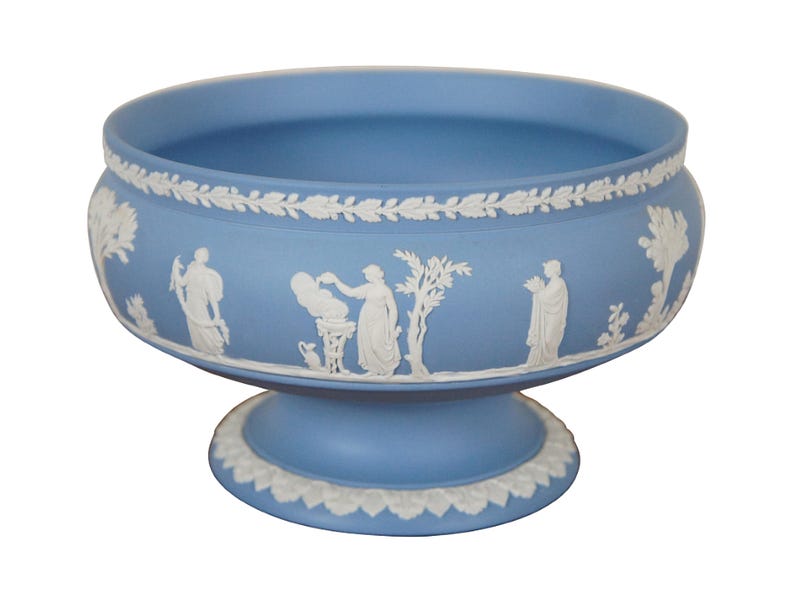
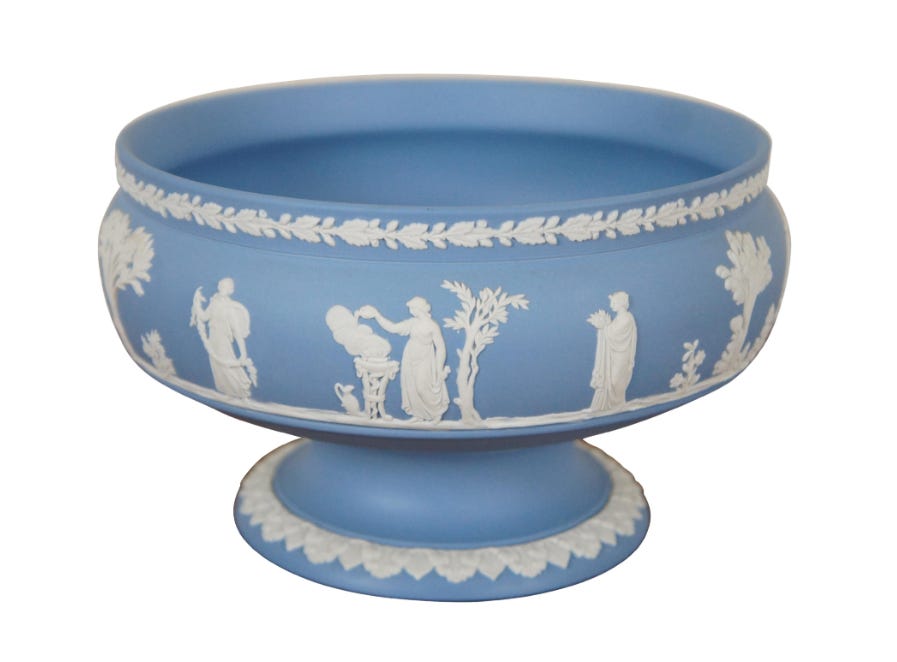
Follow me down the rabbit hole as we discuss what might be the most recognized china of all time. Wedgwood Jasperware. Largely known for its signature pale blue color, it features a fine-grained, unglazed stoneware, decorated with raised white molded ceramic reliefs (which in the pottery world means: a sculpting technique where design elements are raised above the flat surface of a clay object.) While this term may be new to you, the concept is likely very familiar. Think “Cameo” jewelry, which you’ve probably seen in your grandmother’s jewelry box (especially if she’s Southern). Jasperware embodies the same concept. The birth of Jasperware became a defining moment in both Wedgwood history and the evolution of pottery as a whole, which continues to set Wedgwood apart from other brands to this day, over two centuries later.
The History
This iconic brand dates back to 1759 when Josiah Wedgwood, an English potter, transformed ceramic design and manufacturing during the Industrial Revolution in which he pioneered. Josiah began his journey in his hometown of Burslem, Staffordshire, England, which was later deemed as the “World Capital of Ceramics”. Interestingly enough, Wedgwood was born into a family of potters and worked under his older brother who refused to entertain Josiah’s desire to be more innovative and push the boundaries within the family business. (Big mistake. Big. HUGE!)
You can probably guess how the story goes from here.. Josiah parted ways and began working under one of the most esteemed potters in the Country, Thomas Whieldon. Whieldon employed a few other no-names at the time such as Josiah SPODE. We’ll save that story for Substack Post. Needless to say, after their five-year partnership, Josiah Wedgwood was considered highly regarded and a master at his craft. He then partnered with another Thomas, Mr. Thomas Bentley, who helped Josiah elevate his design influence, marketing strategy, and played a vital role in taking the brand to an international level, which eventually turned Wedgwood into a household name.
Josiah Wedgwood, c. 1780 — portrait by George Stubbs, later engraved by W. Holl.Josiah Wedgwood with Queen Charlotte
Wedgwood began creating pottery for Queen Charlotte in 1760s and 1770s, specifically tea sets at her request. Chic! And if creating pottery for the Queen wasn’t enough, it was around this same time (1774 to be exact) that Josiah began to perfect what is known to us all as the most innovative design of its time, Jasperware. This specific material came to be after thousands of experiments, each meticulously documented by Josiah in his pursuit. It has also been documented that Josiah was so competitive and eager to stay ahead, the formula to make said Jasperware was kept a secret so it could not be replicated.
The Designs
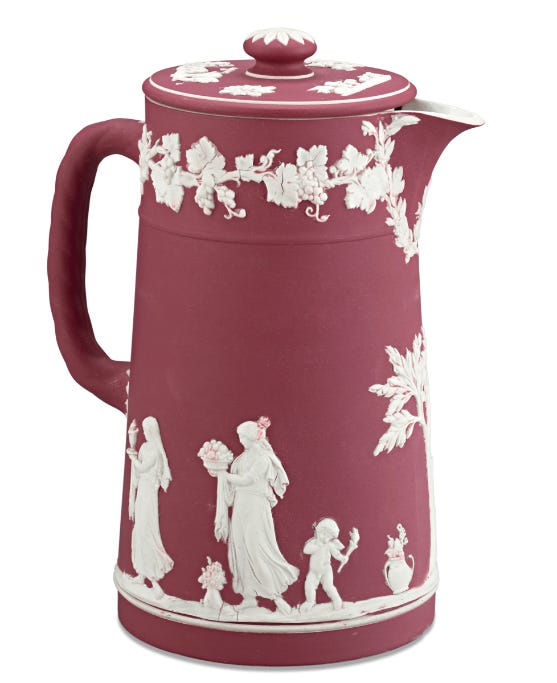
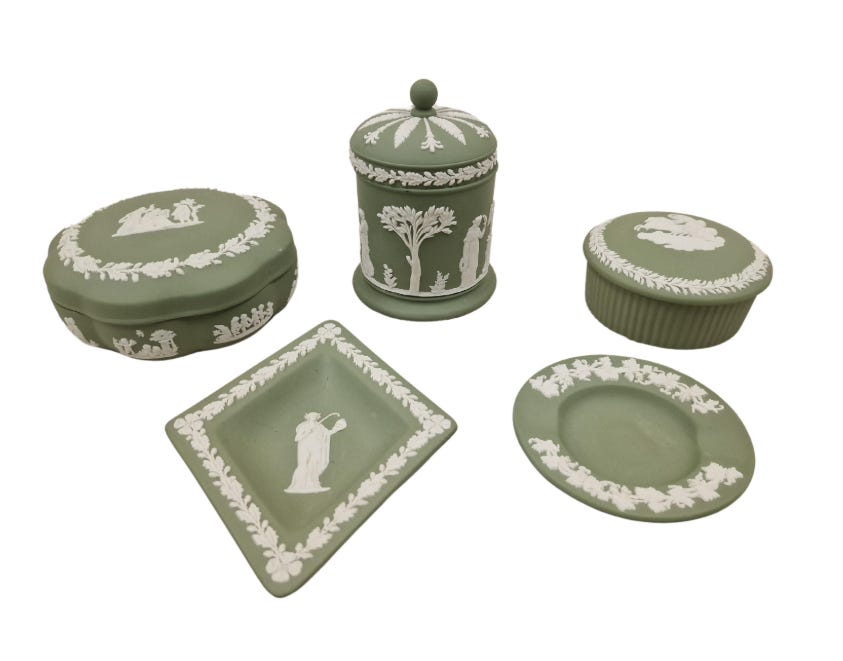
Wedgwood produced hundreds of different types of Jasperware in approximately 30 different colors, ranging from the signature blue to vibrant hues of crimson, sage, royal blue, black, and a number of multi-colored pieces. The items range from plates, bowls, cups, and numerous decorative objects such as vases, urns, trinket boxes, trays and even brooches. And in case you were wondering, the Greek Revival motifs fixed to the pottery are actually not designs of Josiah Wedgwood, but of an English sculptor named John Flaxman, who was hired by Wedgwood in 1775 to model the reliefs before they were applied to the ceramics. Because like every good businessman understands, sometimes you have to outsource and delegate! Below are just a few of the iconic Jasperware designs:
Wedgwood Blue Jasperware 1954 "Sacrifice" Pattern Original England 8" Bowl
Wedgwood “An Offering to Love” Crimson Jasperware Jug, circa 1920.
Wedgwood Sage Jasperware Collection
What To Look For
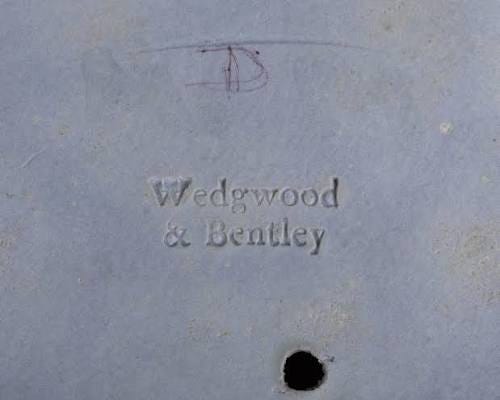
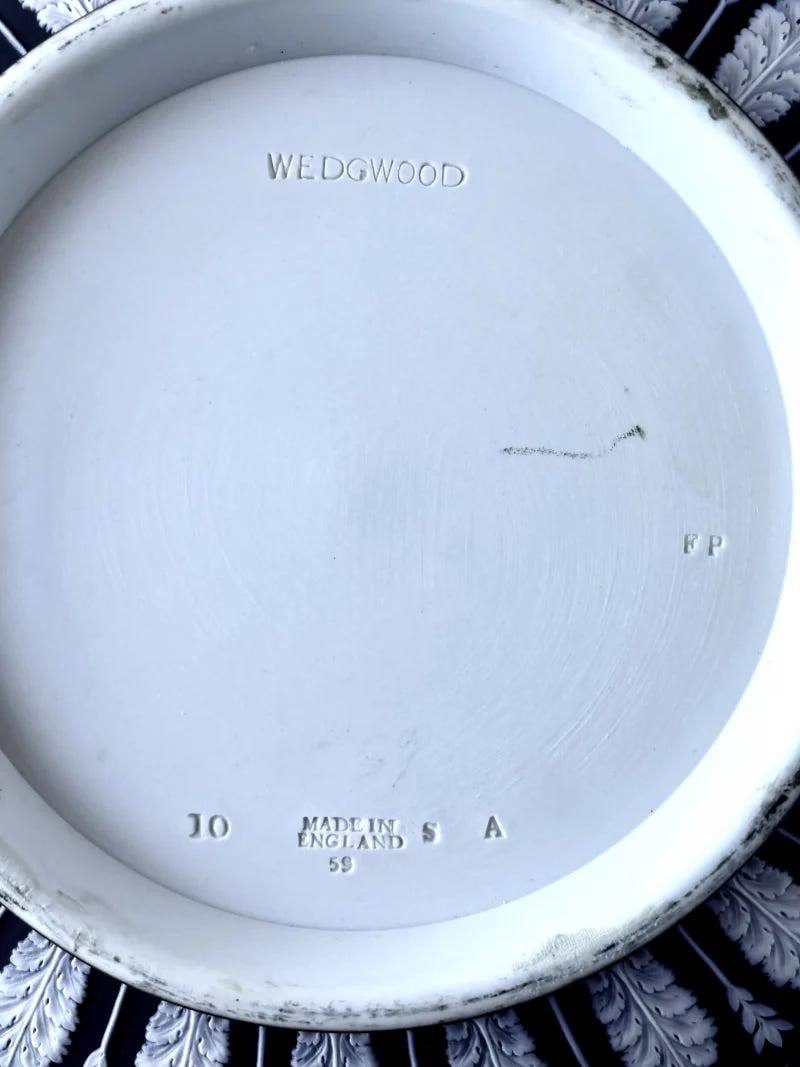
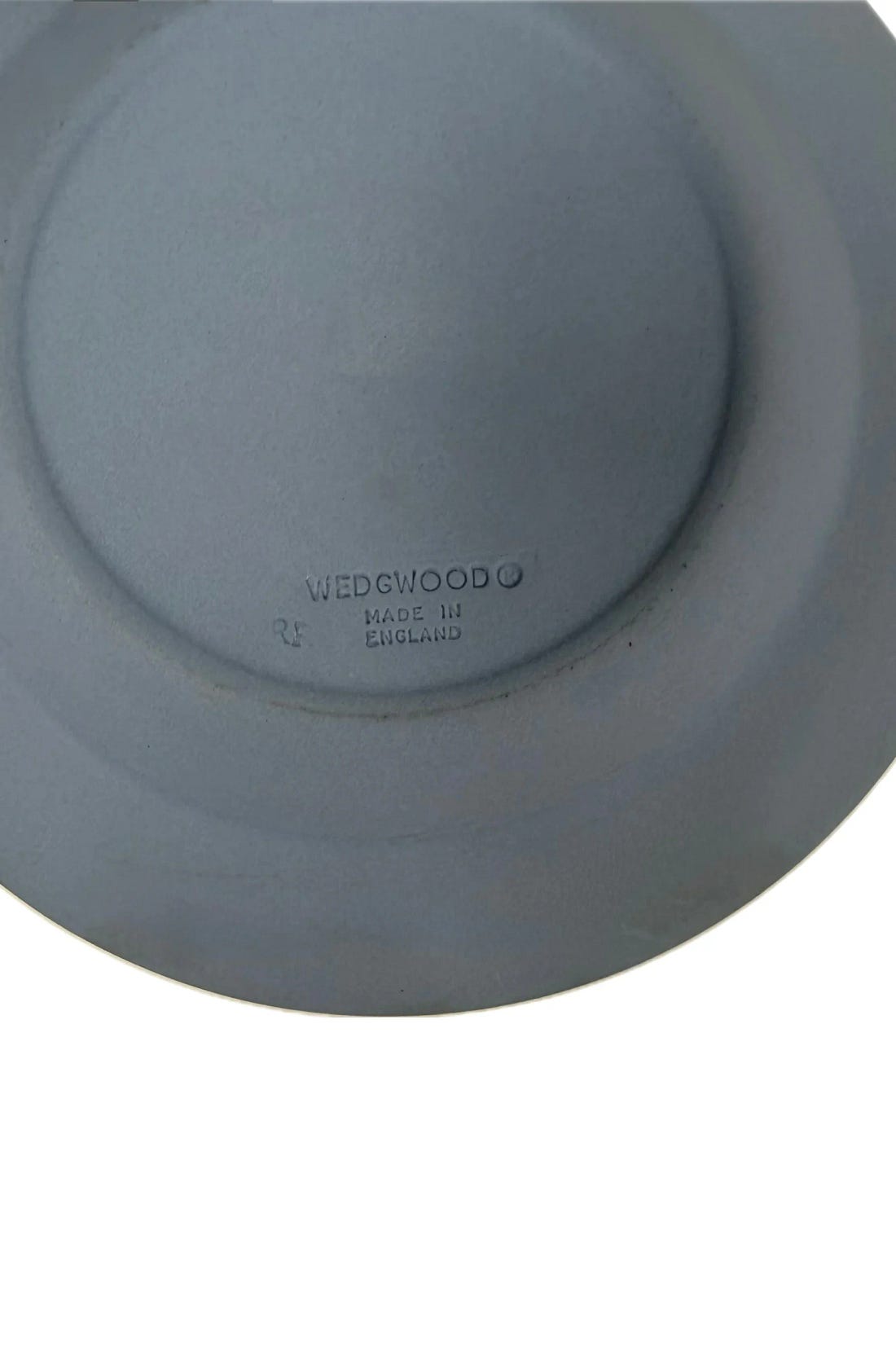
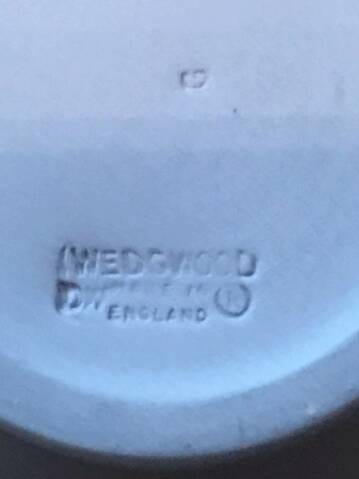
Unlike some other brands, Wedgwood is highly distinct for numerous reasons: its texture, style, and reliefs that make it stand out amongst the crowd. However, it’s still important to know what elements to look for if you’re in the market, not only for authentication purposes, but depending on the time period the item was crafted, it could be the difference in thousands of dollars. Keep in mind that maker’s marks noted on the bottom of the pottery may vary. While we’ve focused specifically on Jasperware in this article, other Wedgwood lines may feature different markings depending on the type of ceramic material used, such as glazed ceramics, as well as the time period, since Wedgwood’s marks have evolved over the years. Looks for stamps such as:
“WEDGWOOD”
“WEDGWOOD ENGLAND”
“WEDGWOOD” “MADE IN ENGLAND”
“WEDGWOOD & BENTLEY” (can be found on older, more sought-after pieces from their partnership mentioned earlier until 1780 when Bentley passed)
Also, PSA: if you see a logo titled “Wedgwood & Co”, or “Wedgwood & Co LTD”, this is a completely separate, unrelated brand of pottery, so please keep that in mind when looking for Wedgwood designs.
Most Valuable
There are of course certain colorways, larger relics, and older Wedgwood Jasperware pieces that hold considerably more value than the more common colors, such as blue, sage, and black, and smaller objects like trinkets and ashtrays. This is because the larger urns and vases demanded more complex craftsmanship. Rarity can be found in colors like Crimson Dip (specifically late 1800s–1920s) which is extremely rare due to color bleeding issues, causing the brand to discontinue this color in 1932. Other less common, sought after colors include Yellow, Lilac, and Tri-colored objects.
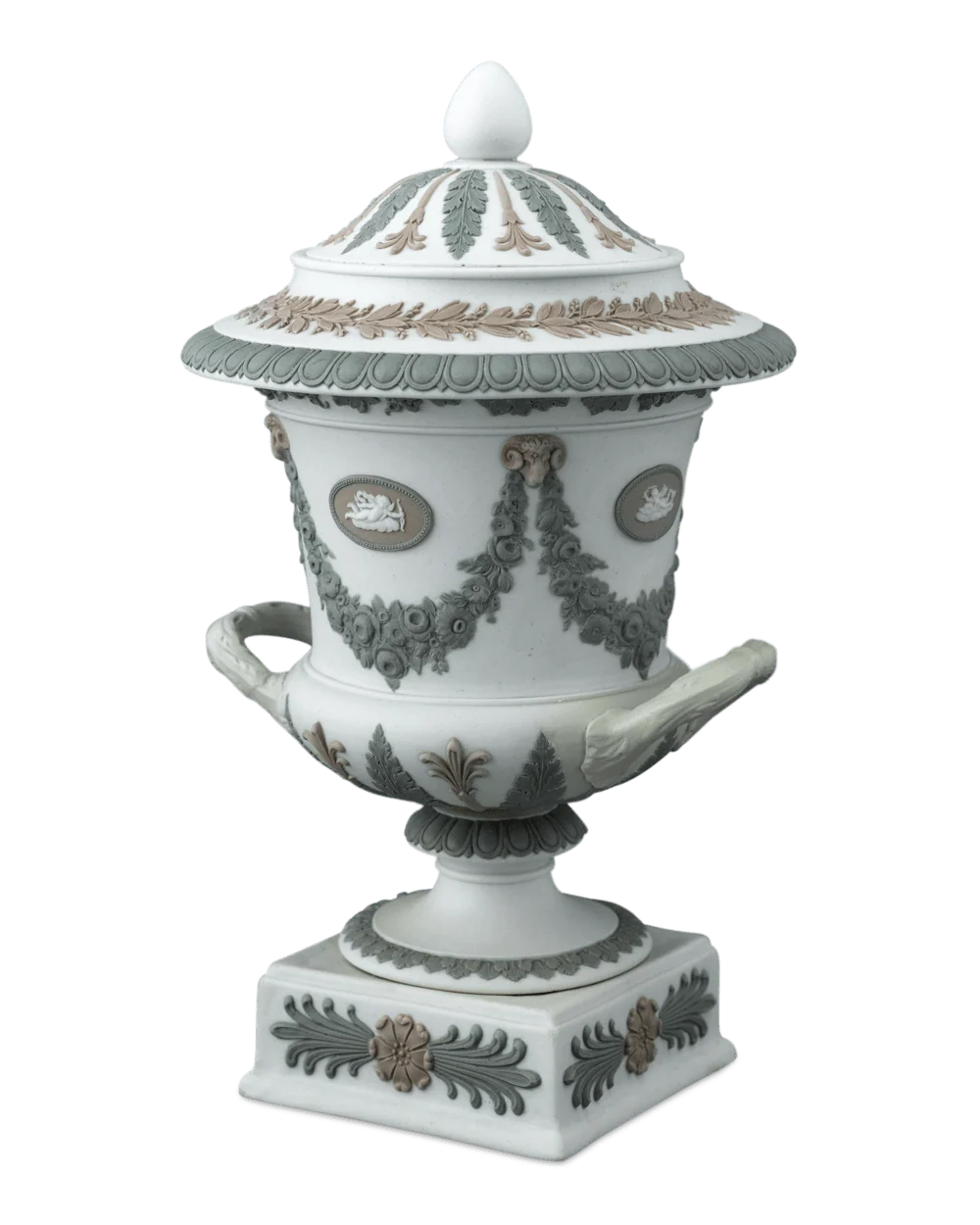
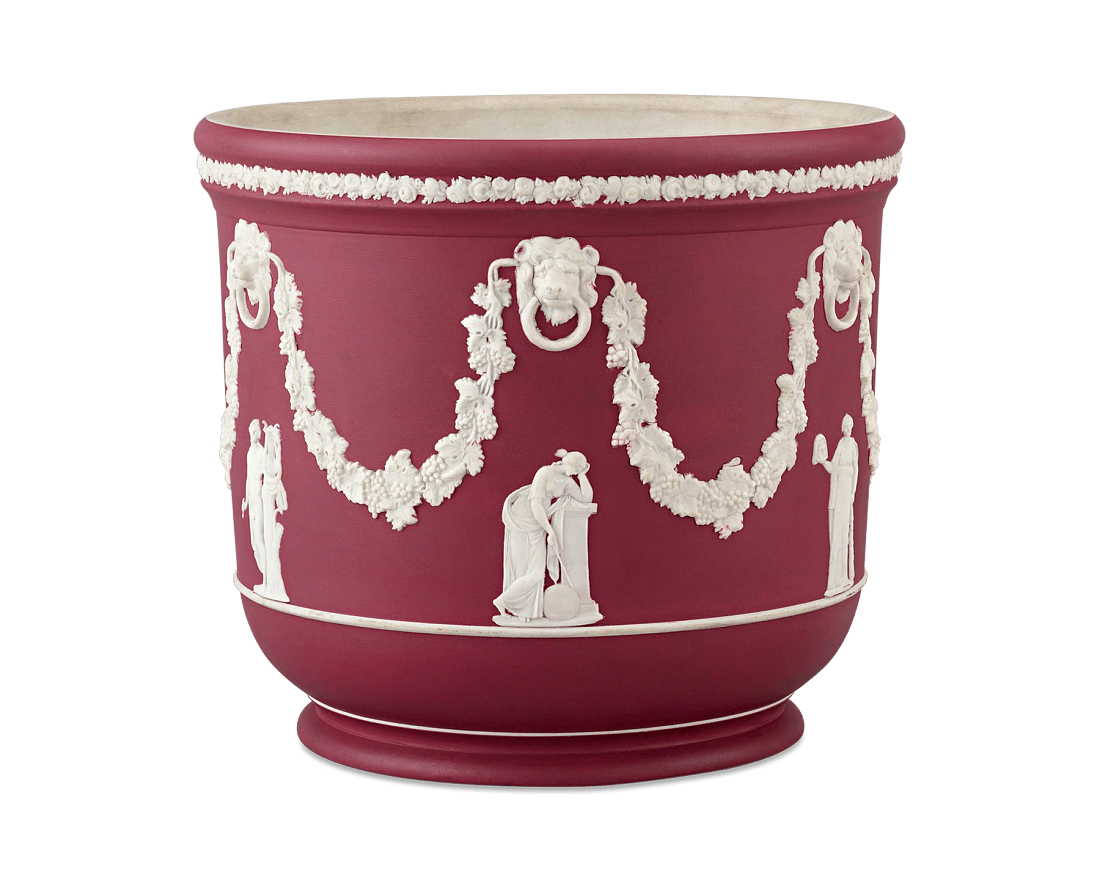
“This exceptional and rare Wedgwood tri-colored jasper vase exemplifies that renowned firm’s classical artistry. Crafted of jasper, perhaps the greatest of Josiah Wedgwood’s porcelain innovations, in the shape of an ancient Greek calyx krater vase, the white ground vessel is adorned with applied lilac and green relief medallions, floral festoons upheld by ram’s heads, and intricate foliate accents, including an olive branch border and palm details.” Courtesy of M.S. Rau Antiques. Available for $3,450.The classical elegance of Wedgwood is showcased in this rare crimson jasperware jardinière. The highly prized vivid crimson hue of the vessel is beautifully accented by white flowered and ribboned garlands, while the draped Grecian figures of the muses encircle the form. Consisting of a white stoneware body which can be colored by the addition of metal oxides, the composition of jasper was the factory's most closely guarded secret. Courtesy of M.S. Rau Antiques. Available for $4,450.
FUN FACT
I was today years old when I learned that Birmingham, Alabama is home to the largest Wedgwood ceramics in the United States, located at the Birmingham Museum of Art. This museum is ranked the second largest in the WORLD, with the first largest located just outside of England. As I mentioned when I started The Dainty Dish, SOUTHERNERS KNOW THEIR CERAMICS and take great pride in curating their collections. I’ve never been prouder to be an Alabamian LOL. Thank you to antique expert, Alexander Widener, for posting this video from his recent visit to the museum, where he shares his extensive knowledge and genuine appreciation for the brand. It felt especially serendipitous to include in this week’s article! I highly recommend giving Alexander a follow - he’s brilliant and a wonderful resource for anyone who appreciates beautiful things with a story.
If there’s one thing I hope you take from this article (if you’re still with me, that is) is a true understanding of why Wedgwood is so special: not only for its beauty, but its story. Its designs have been collected and passed down through generations, and somehow, they still feel just as relevant (if not more-so!) today as they did centuries ago. So, the next time you come across a piece of Wedgwood, try to take a moment to appreciate where it came from. History is beautiful, and there’s no better place to keep it alive than around the table.
This holiday season, we're exploring the stories behind some of the most iconic Christmas china patterns, from their rich histories and timeless designs to the traditions that make them classics.
By Morgan Dixon October 28, 2026 · 5 min read
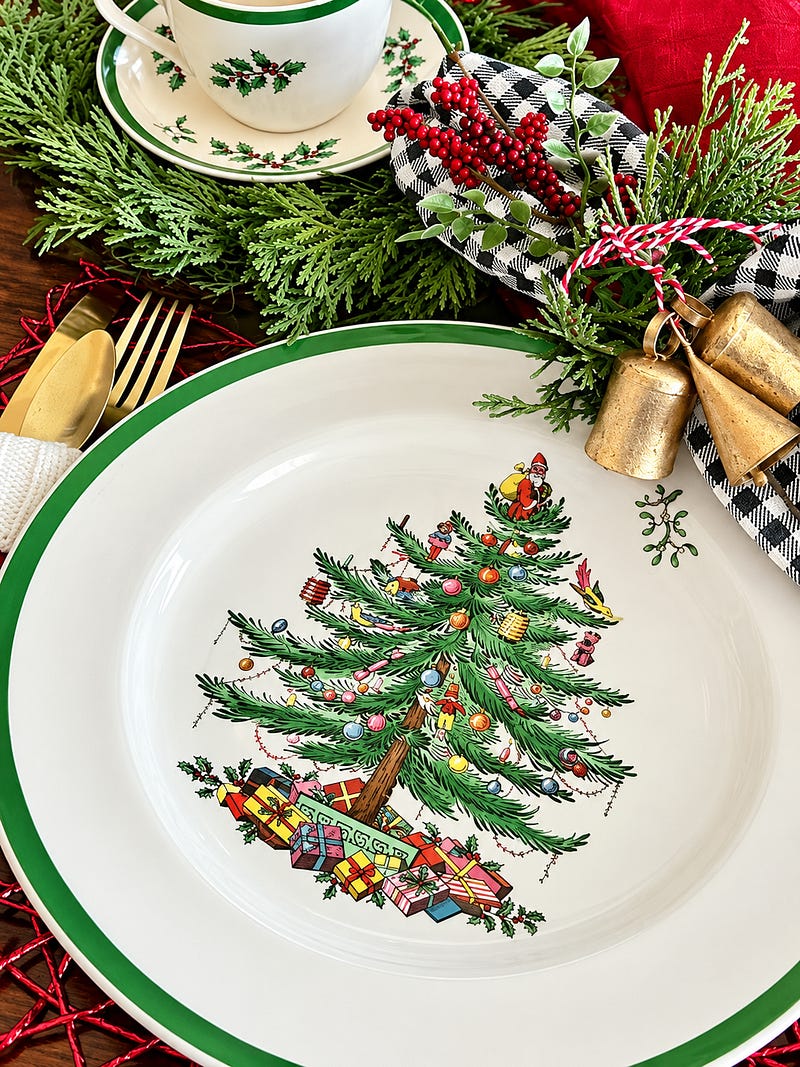
Believe it or not, Christmas is right around the corner. Which feels KOO KOO to say, but it’s time we shift our sights to the holidays. While there are endless ways to embrace your holiday spirit and love for decorating (assuming you’re into that; otherwise, you wouldn’t be reading this article), there’s one area that I feel might be the most important. CHRISTMAS DISHES. And not just any Christmas dishes, I’m talking Spode Christmas dishes. Their nostalgic Christmas tree design has stood the test of time, finding its way back onto holiday tables for nearly 90 years. So, what makes them so special?
The History
While we’d normally talk about the history of the brand itself, I feel it’s more important to highlight the history of the Spode Christmas tree dishes. These iconic Christmas plates graced our presence in 1938, when British ceramic designer Harold Holdway (1913-2002) was developing the now-famous Christmas Tree pattern for the American market while working for Spode. Funny enough, Harold had never actually SEEN a Christmas tree… was he okay?
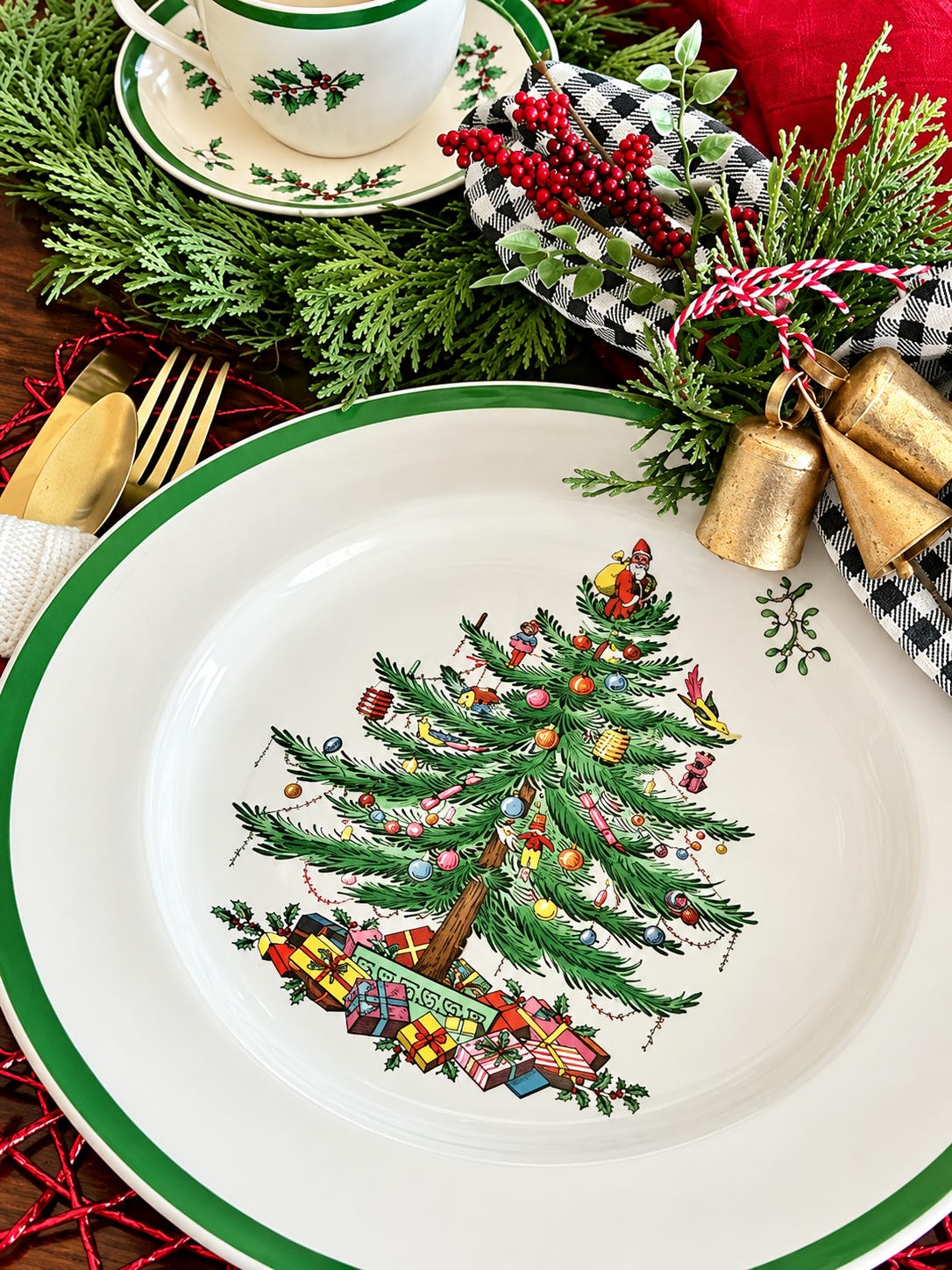
His original sketches featured presents hanging from the branches, until he realized the weight would cause them to droop. Harold really needed to get with the times, because placing gifts on the tree hadn’t been customary since the 1840s, when traditional Christmas gifts were fruits and nuts, not a PlayStation. After learning that gifts were traditionally placed beneath the tree, he reimagined the design with a beautifully decorated tree standing above the floor scattered with presents below. If you look closely, Santa with his big, yellow sack sits on TOP of the Christmas tree in the illustration. While the traditional tree topper is an angel, this unexpected element, which is another result of Harold not understanding the traditional elements of a Christmas tree, continues to set Spode Christmas dishes apart from any other holiday line. A thick green (or occasionally red) border accented with holly and mistletoe completes the iconic look. Other variations include a floral or tartan border. The first EVER 10” plate had the inscription “Wishing You a Merry Christmas 1938” printed on the back. Orders quickly poured in, and although the inscription was discontinued the following year, the design evolved into a complete dinnerware collection, which of course, we’ll get into. The pattern is even credited with helping sustain the company during leaner times, and by the end of 1999, it had become the best-selling casual dinnerware pattern in the United States. Today, the pattern remains a beloved holiday classic, bringing a touch of nostalgia, color, and timeless Christmas charm to the table.
The Full Collection
LUCKILY, this pattern comes in a variety of different pieces, because just the plates are simply not enough.
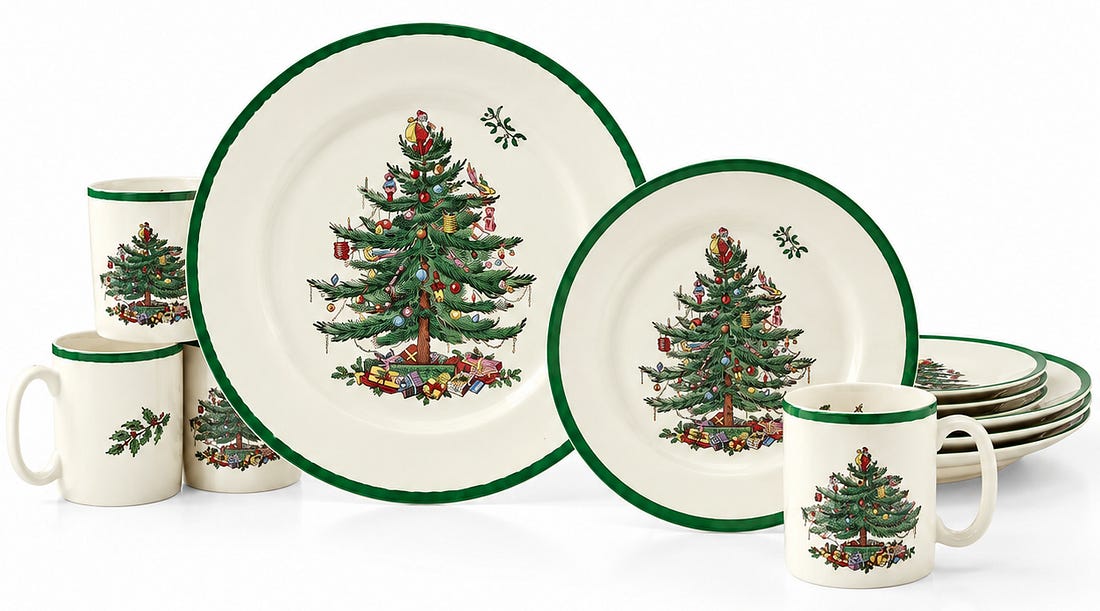
Linking the full set here!
PLATES
Dinner Plate: 10.75” in diameter
Salad Plate: 7.75” in diameter
Bread & Butter or Dessert Plate: 6.5” in diameter
Saucer: 5.5” in diameter
GLASSES
Highball Glasses: 15 oz glasses feature the classic Christmas tree motif with a gold rim.
Double Old-Fashioned Lowball Glasses: 14 oz tumblers are perfect for serving spirits, eggnog, or holiday cocktails.
Wine Glasses, Champagne Flutes, Pedestal Goblets & Tulip Glasses: These glasses are clear with a beautiful gold rim featuring the recognizable Christmas design on the front. Some of which also feature a green and red polka-dot design for added flair.
Tea Cups & Cafe Mugs: If you’re not drinking hot chocolate out of your Spode Christmas tree mug by a fire, you need to reevaluate your life.
PLATTERS & SERVEWARE
Classic Round Platter (14”): Perfect for serving appetizers, holiday cookies, or smaller bites throughout the season
Sculpted & Oval Platter: The 19” sculpted platter makes a statement with its dimensional shape, while the classic 17” oval platter is ideal for serving the main course.
Tree Shaped Dish (14”) & Two-Tiered Tree Shaped Server: We love a tiered server and the height it gives to any spread!
Pitcher: The classic large pitcher holds 2.25 pints (approximately 36 fl oz) and stands 8” tall.
Gravy Boat: Showcasing the iconic motif with an attached plate, the perfect addition to any holiday table.
Embossed Sleigh Platter: My personal favorite. In the shape of a sleigh, this is the obvious choice for leaving Santa’s cookies out the night before.
Pie Server: A festive finishing touch for serving your holiday pies and desserts.
Where To Find It
Fortunately, Spode Christmas dishes are pretty easily accessible and affordable, which has likely contributed to their continued popularity through the years. Full sets can be found at department stores such as Macy’s and other major retailers like Target, Bed Bath &Beyond, Wayfair, Birch Lane and more. If you’re looking to thrift or wanting to build upon your current collection, Etsy, Goodwill and Facebook Marketplace are also great alternatives. You haven’t LIVED unless you’ve packed a bunch of rogue dishes in your trunk from a stranger’s house and prayed they’d make it home in one piece!
Next time you’re on the hunt, look for stamps such as:
Pattern Number (S3324): Identifies the classic Christmas Tree design, featuring the iconic green border and decorated tree. Other shapes and variations may carry different pattern numbers.
Date Codes: Letters or letter and number combinations following the pattern number can help determine the year of manufacture.
A–N: 1976–1989
P–W: 1990–1997
Y–Z: 1998–1999
A0, A1, etc: 2000 and on (A0 = 2000, A1 = 2001)
Older Date Marks: Pieces made before 1963 may feature different dating systems, including a letter above two numbers.
The Inspo
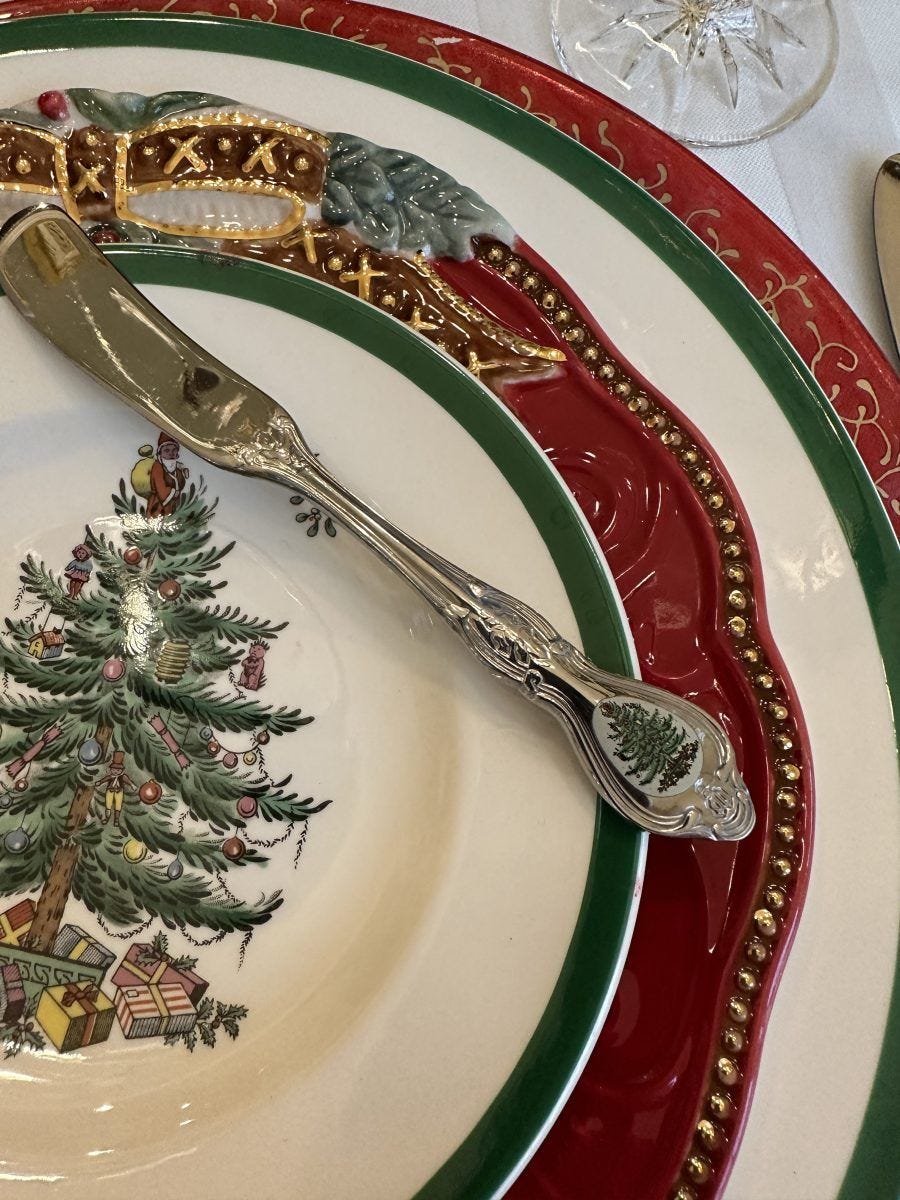
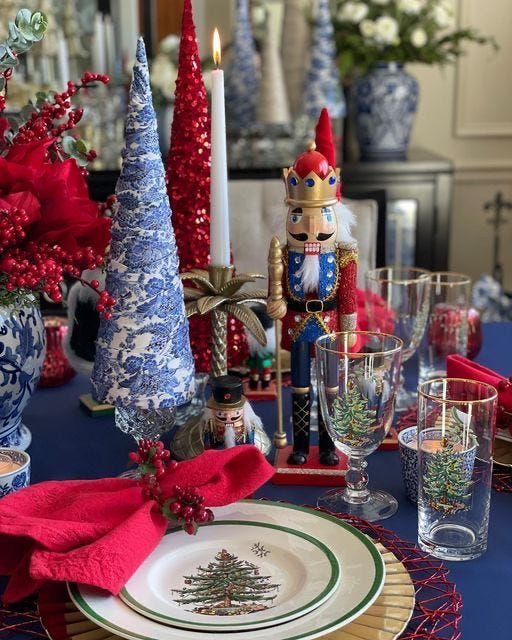
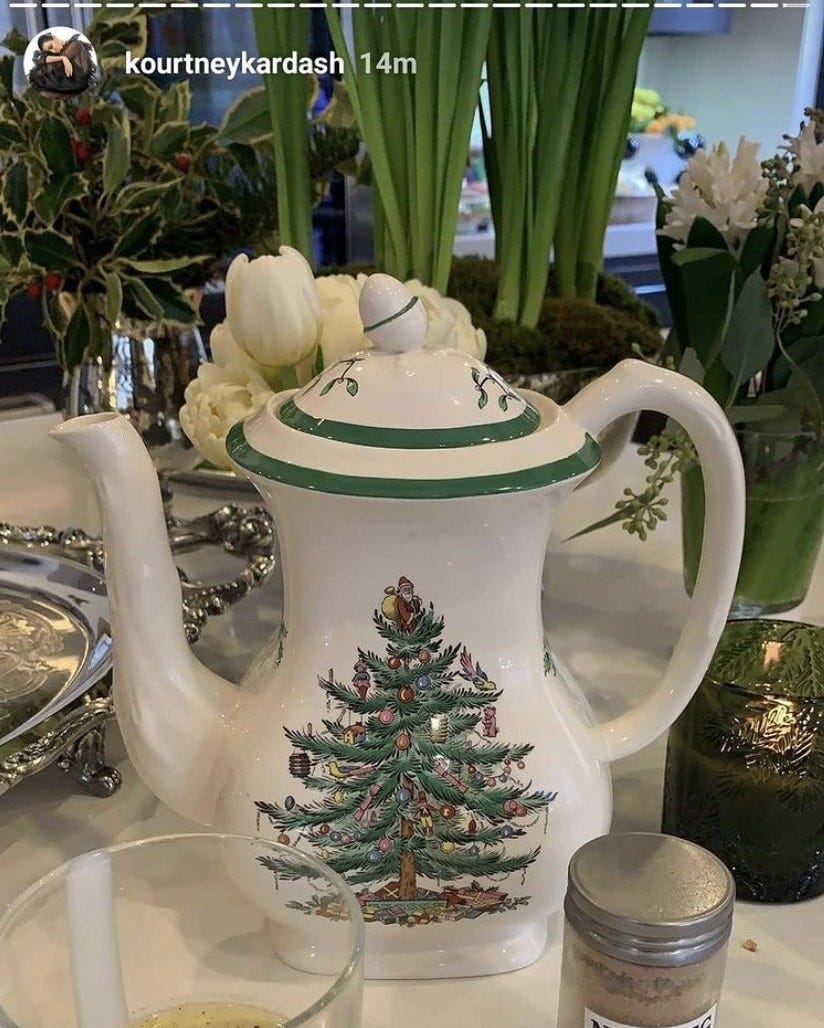
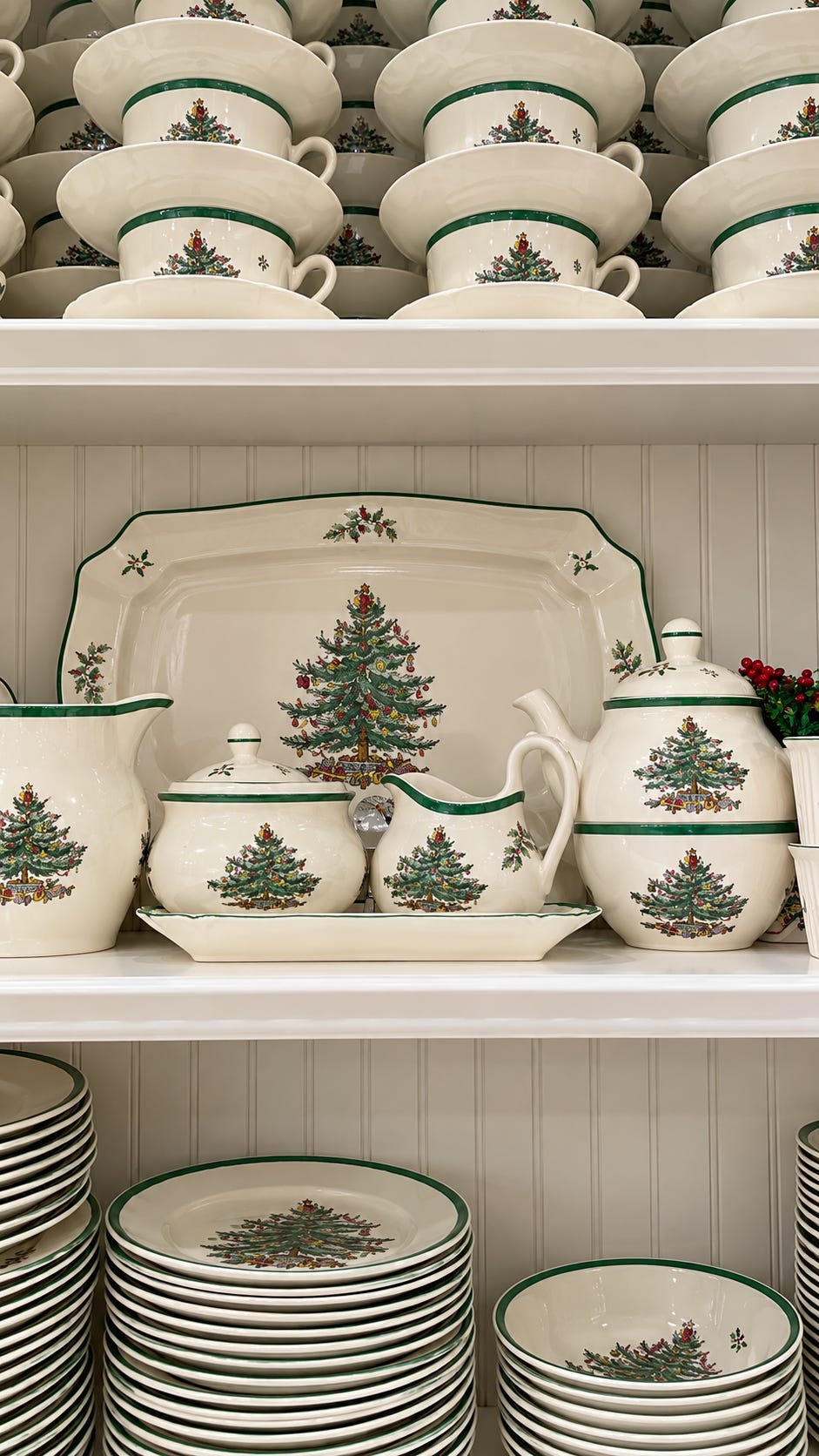
Complete with a Spode Christmas spreader, obviously!The perfect accent to any Christmas table. And yes, blue is completely acceptableKourtney Kardashian gets it.Christmas china cabinet of my DREAMS
What began as a simple Christmas tree design has become so much more. For generations, Spode’s Christmas Tree has found its way onto tables across the country, becoming part of the memories, traditions, heirlooms, and little moments that make the holiday season SO special. Whether inherited from family, collected over the years, or purchased for a first Christmas in a new home, each piece carries the same invitation: to gather, celebrate, and carry the magic of Christmas from one generation to the next. This beloved pattern serves as a reminder that Christmas has always been about more than what’s on the table. It’s about who’s gathered around it, and the reason for the season.
A decorative treasure with centuries of history, and why NO home is ever complete without one — or five.
By Morgan Dixon November 2, 2026 · 5 min read
You may be asking yourself, what even is a ginger jar? Yes, we all know what they look like, but why is it called a ginger jar, and is it necessary for me to buy another one? First off, the answer is yes. Secondly, I’m here to enlighten you.
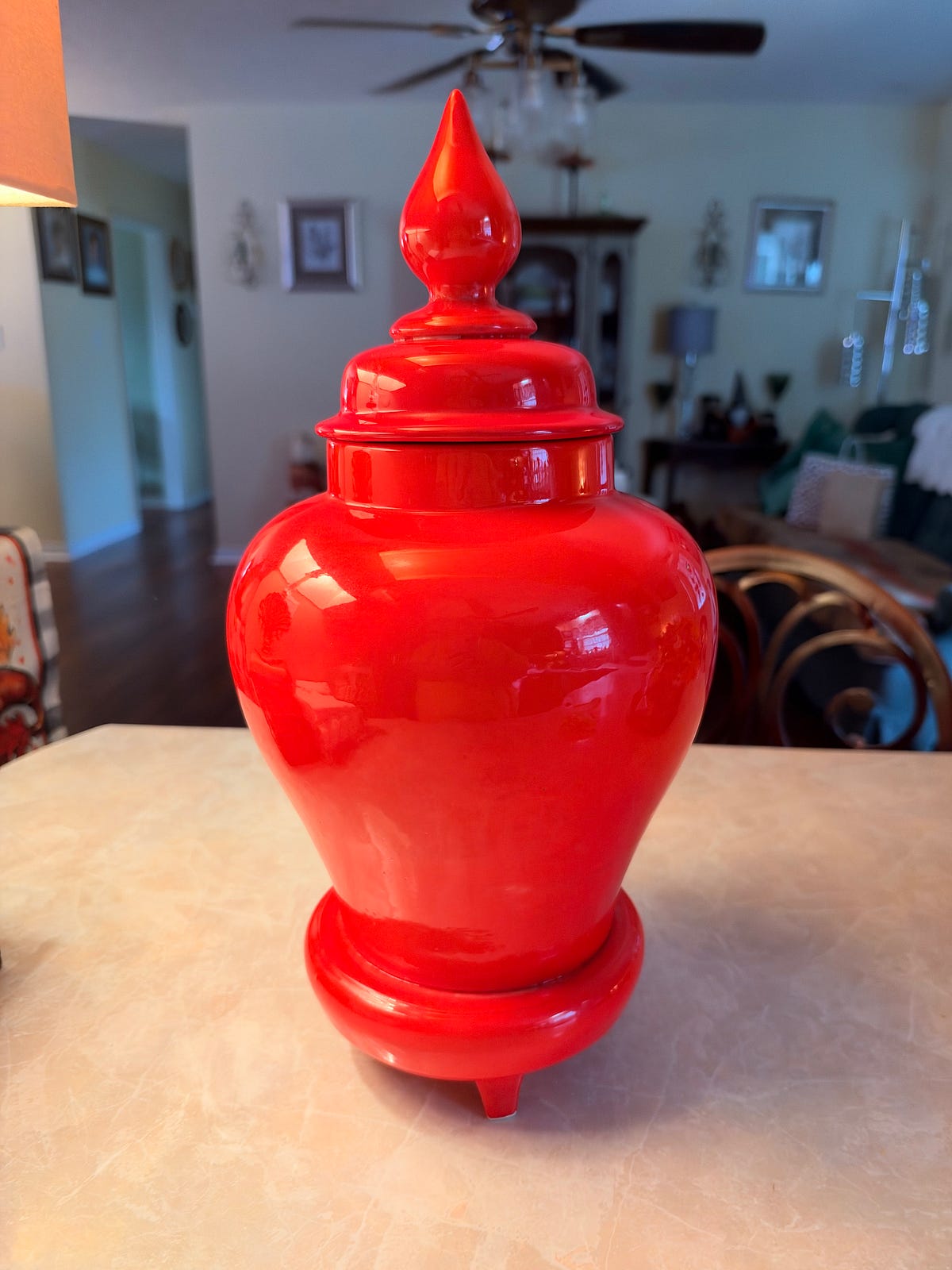
My late grandmother MADE this ginger jar at a pottery class in 1970, so I’m dedicating this article to her. She was a natural.
Historically, ginger jars date back to ancient China where they first appeared as ceramic pots called “guan” during the Qin Dynasty in 221–206 B.C. They were originally used as cargo containers for fine goods like spices, salt, oil, and you guessed it, GINGER!
By the 18th century, Chinese porcelain had become highly coveted across Europe, and blue and white ginger jars found their way into the grandest of European homes. That obsession sparked the beloved “Chinoiserie” style, drawing inspiration from Chinese designs that were then reimagined for European interiors. Now obviously, in true American fashion, American colonists wanted in on the trend too, but British laws kept them from trading directly with China. So, every Chinese ginger jar headed for our colonies had to pass through Great Britain first (at a British markup, of course). It wasn’t until after the Revolution, when the Empress of China (the first American merchant ship to sail from the US to China) sailed from New York to Canton in 1784, that Americans could finally bring porcelain home for themselves! That sounds so much harder than rolling up to your local TJ Maxx… Blue and white ginger jars quickly became a fan favorite (and still are if you ask me), inspiring makers like the Dutch potters of Delft to produce their own interpretations.
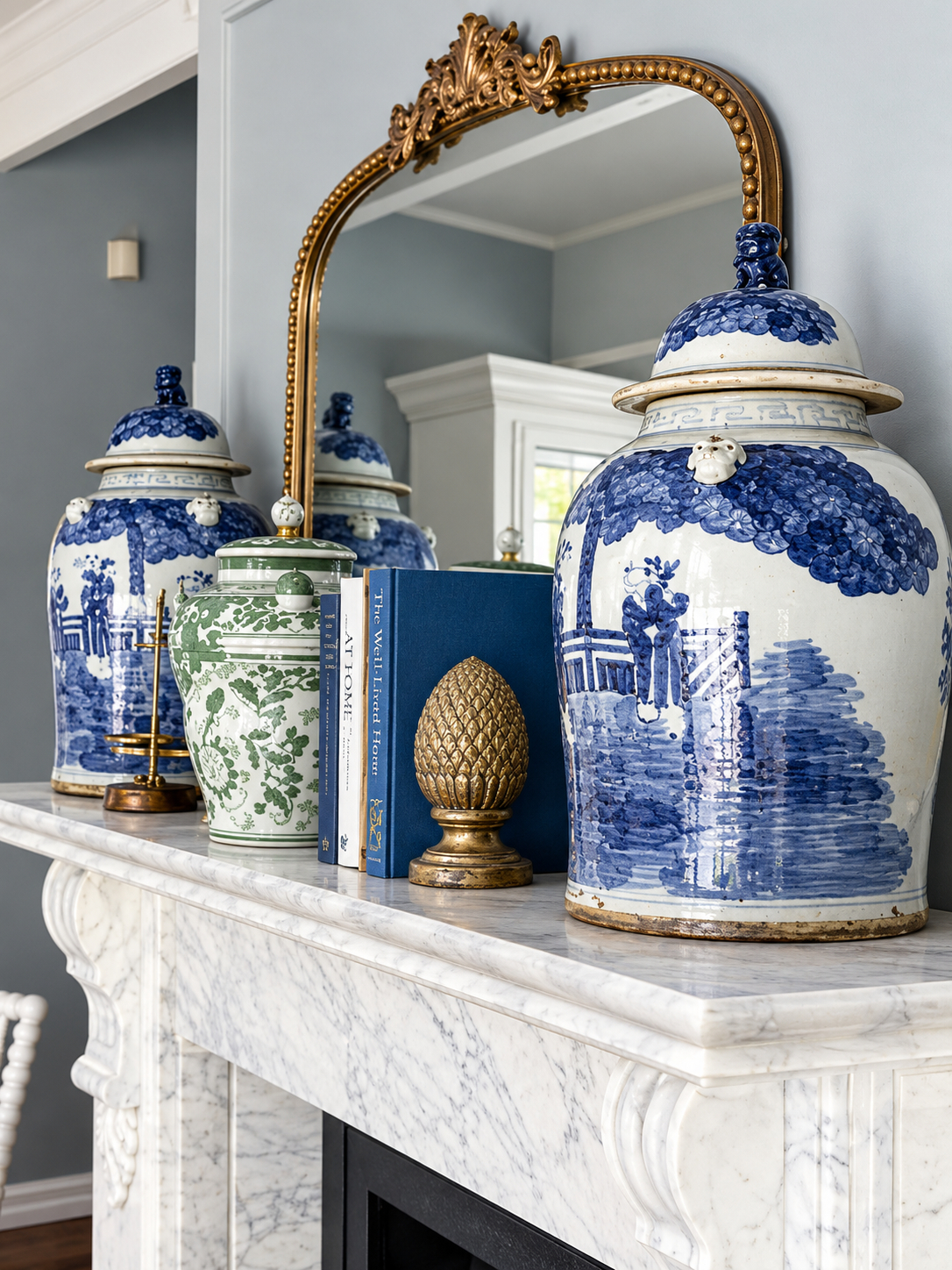
Centuries later, antique ginger jars remain highly sought after by collectors, and their timeless appeal continues to make them a prized fixture in homes around the world. To me, ginger jars are the epitome of timeless, classic design. I don’t know about you, but to me, it feels like SO many of us are being drawn to things, places, and people that make us feel nostalgic, safe, and help us reflect on a different, simpler time. That’s what ginger jars mean to me (hence the showstopper my grandmother made that sat on top of her mantel in the living room for as long as I can remember). That is truly a feeling worth recreating.
How To Style
I think it’s safe to say if a decorative object has been in demand since before Jesus walked the earth, it will literally NEVER go out of style. However, it helps to know how to style a ginger jar in your home so that it feels more like a statement piece and less like an afterthought. Here are the rules I abide by when styling them:
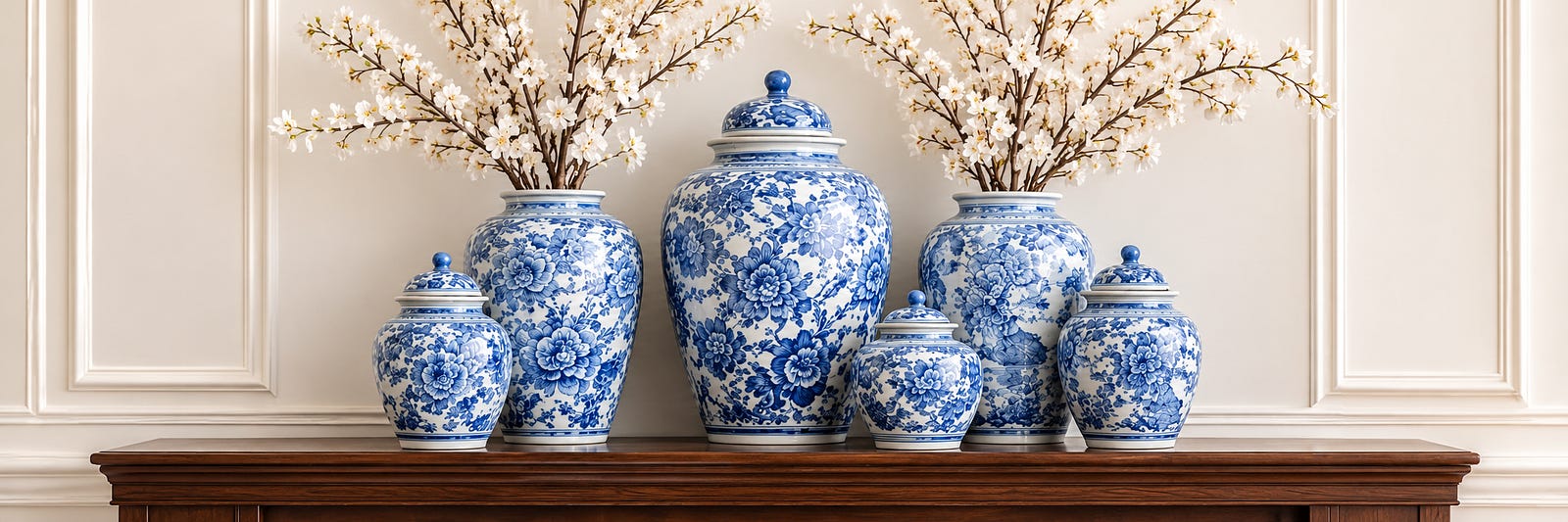
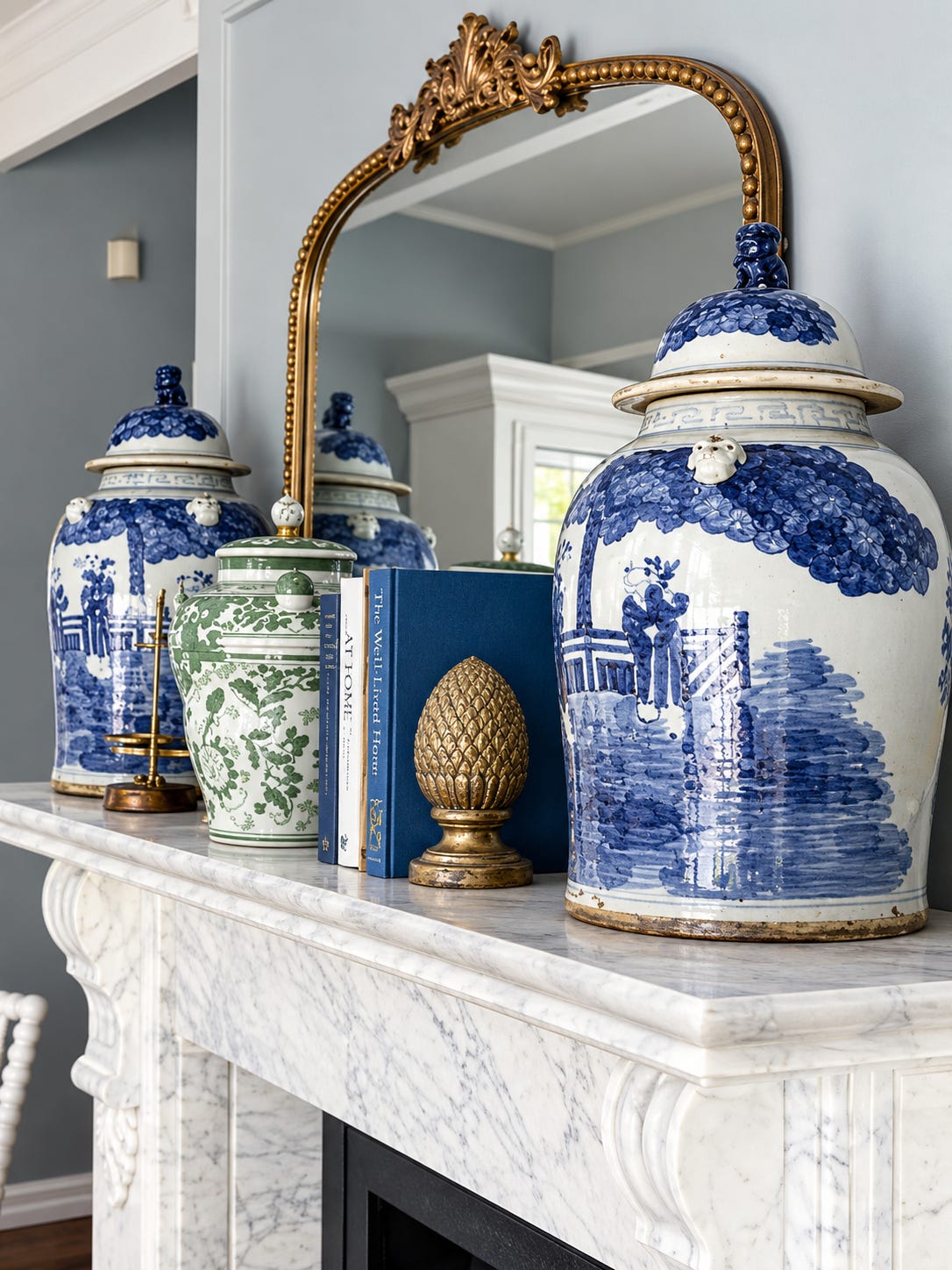
As a Group: For maximum impact, style ginger jars in groups, mixing different sizes, colors, and shapes. Whether you’re displaying two or twelve, their varying silhouettes and complementary designs create a collected, layered look that feels far more polished and intentional.
Up High: Place ginger jars on top of bookshelves and cabinets to add height and dimension to a room. It’s an easy way to draw the eye upward and make use of vertical space. Bonus points: they’re also less likely to get knocked over when they’re safely out of reach!
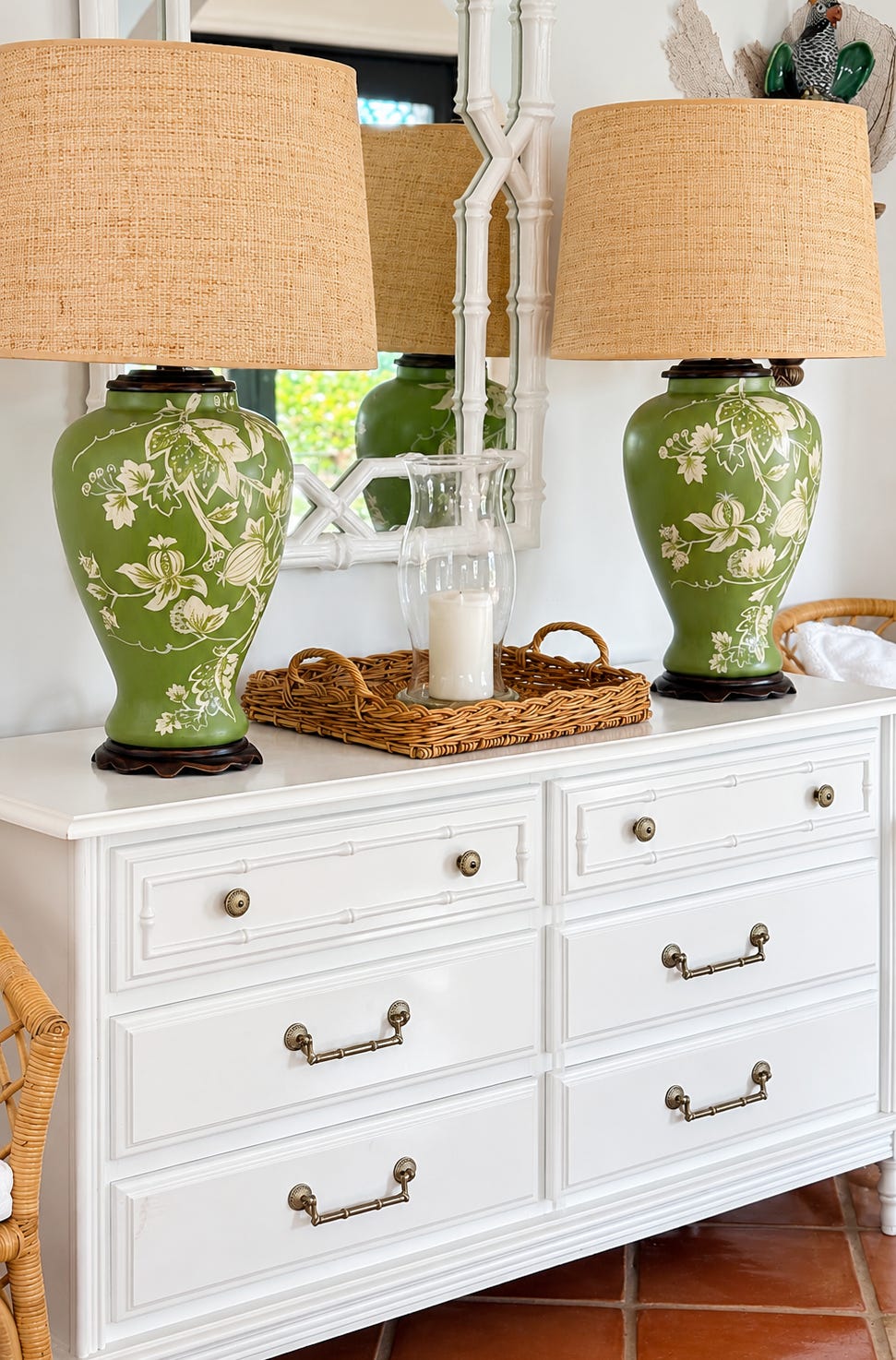
Add Functionality: Choose a lamp with a ginger jar base to bring the decorative element into your home in a more functional way. You get all the charm of a ginger jar with the added bonus of a soft glow - the best of both worlds!
On a Mantel or Entryway Table: Use a ginger jar as a focal point on a mantel or entryway table to anchor the space. Ginger jars are also a lovely addition to bookcases, adding visual interest while breaking up rows of books and complementing other decorative objects.
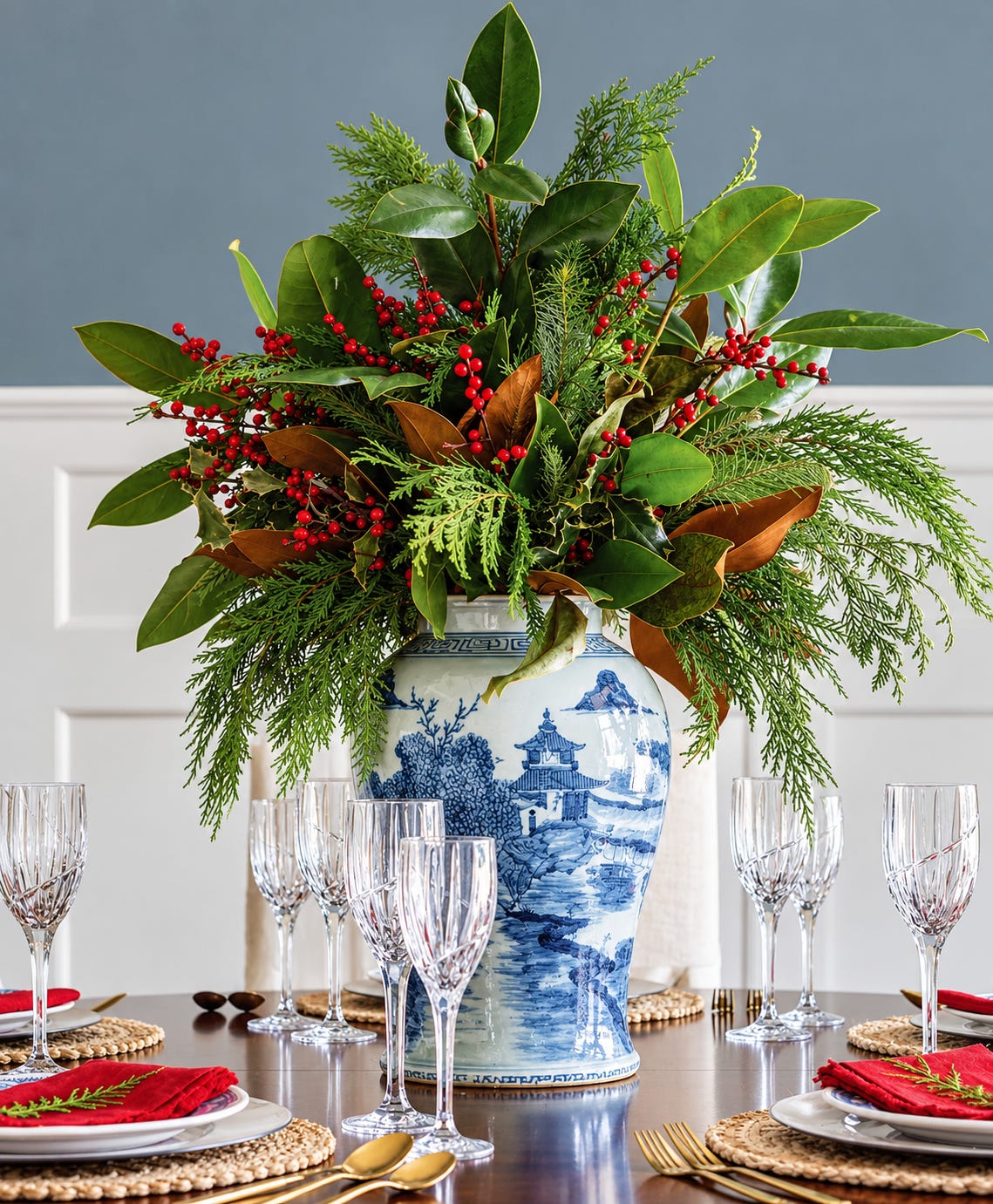
As a Vase: Remove the lid and use your ginger jar as a decorative vessel for fresh flowers, seasonal stems, or branches that bring a little extra life to your space.
Down Low: Style ginger jars on the floor or the lowest shelf of a console table to draw the eye downward and create visual balance.
Best Places To Source
While most home stores offer an array of ginger jars, my personal preference is to source at antique shops or at estate sales. Certain patterns can feel a bit mass-produced, and I find joy in sourcing rare patterns and colorways that you don’t see every day. I also appreciate seeing the vessel IN PERSON, a rare concept these days, so you can ensure the sizing is correct for your space. If you do ultimately resort to online shopping, some of my FAVORITE sites that have the best options at incredible price points are The Mayfair Hall, Lamps Plus, and Perigold. Etsy is also an incredible alternative for the rarer finds. In case you’re wondering whether your favorite brands make their own ginger jars, they do. Brands like Spode, Juliska, and Ginori have their own versions of ginger jars, and yes they’re STUNNING but come at a hefty price.
Three words when sourcing antique ginger jars: condition, age, and quality. Above all, consider these details collectively rather than relying on any single indicator. If you’re investing in a potentially valuable antique, a qualified specialist can help verify its age and authenticity.
Weight: Authentic ginger jars are usually heavier with a denser porcelain. Since they were used as cargo containers, the durability was essential to their original use and a good indicator of the age and quality of the item.
Design: Hand-painted designs often show subtle variations in brushwork and depth to the colors and glazes, whereas printed patterns tend to appear more uniform with fewer details you can actually feel.
Maker’s Mark: Check the bottom for Chinese reign marks, but remember that older marks were often reproduced on later pieces, so a mark alone cannot confirm the age.
Footed Ring or Pedestal at the Base: Most traditional ceramic ginger jars have a slightly recessed, unglazed circular base that lifts the body of the jar off of the surface below. This small detail helps promote airflow and protect the ceramic from moisture, and is how most antique pieces were made. Modern vessels tend to have a flatter bottom.
Matching Lid: This can add to a jar’s desirability. Check that the lid is a matching fit and aligns with the body of the jar (similar wear, color, texture, etc.)
I hope you’re feeling inspired to go source a ginger jar to add to or start your collection. There’s something special about knowing that generations before us were just as drawn to these timeless pieces. Trends come and go, but a beautiful object never goes out of style. And if ginger jars have managed to charm us for centuries, I’d say that’s all the more reason to make room for just one more.
An in-depth guide that highlights the serving utensils every home needs (including the ones you probably didn’t even know existed!)
By Morgan Dixon October 15, 2026 · 5 min read
This post contains affiliate links. If you buy through them, The Dainty Dish may earn a small commission at no extra cost to you.
Picture this. You’re in an antique shop and you hit the jackpot on sterling silver serving utensils, each under $5. That was the reality my mom and I recently had during one of our routine antique shopping runs. Transparently, there were a few serving utensils that I had NO idea what they were for, but bought them anyway (because I am never one to turn down a $5 sterling silver find). This instantly sparked the inspiration behind this article. We don’t talk about it enough, but there are dozens of serving utensils, all which serve a very different purpose that I feel deserve our attention. Whether you love to host, are building your collection, or have ever come across a certain serving utensil and wondered, “Wait… what is this even for?” you’re in the right place!
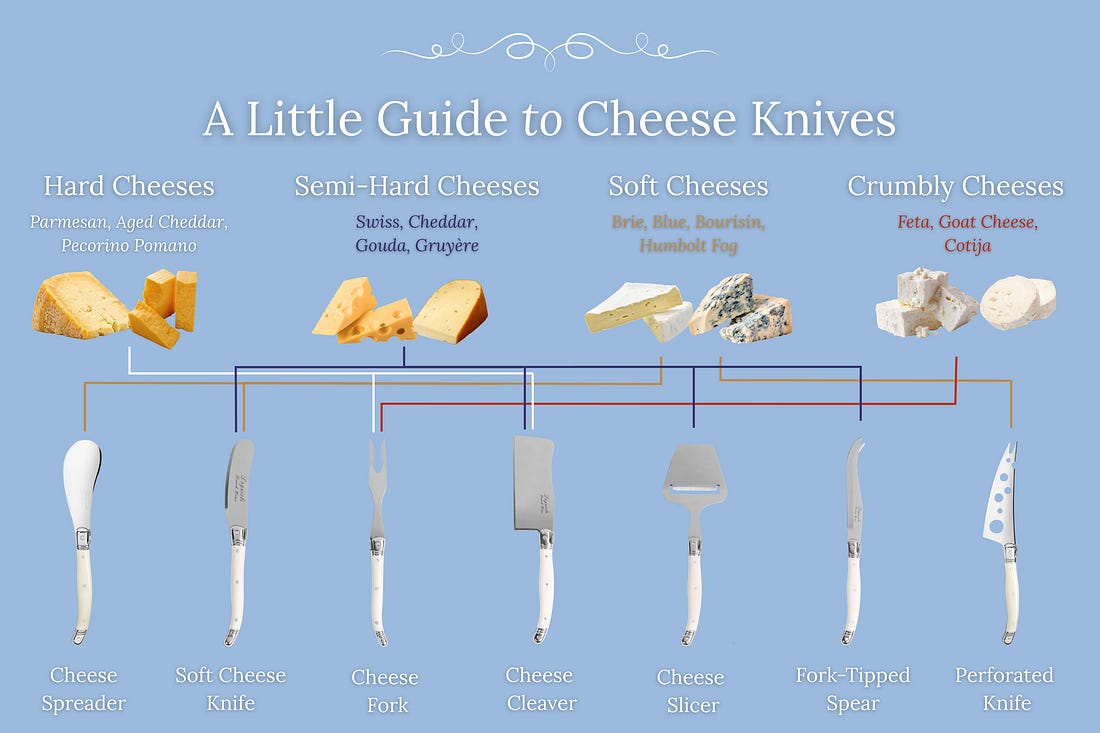
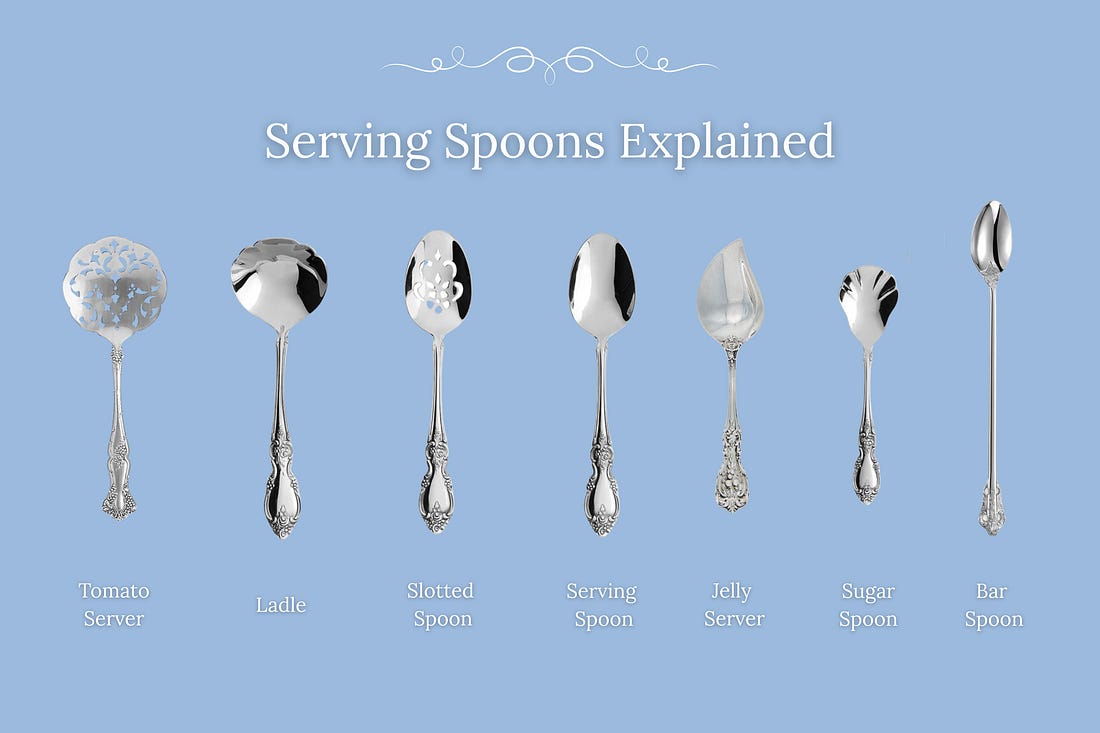
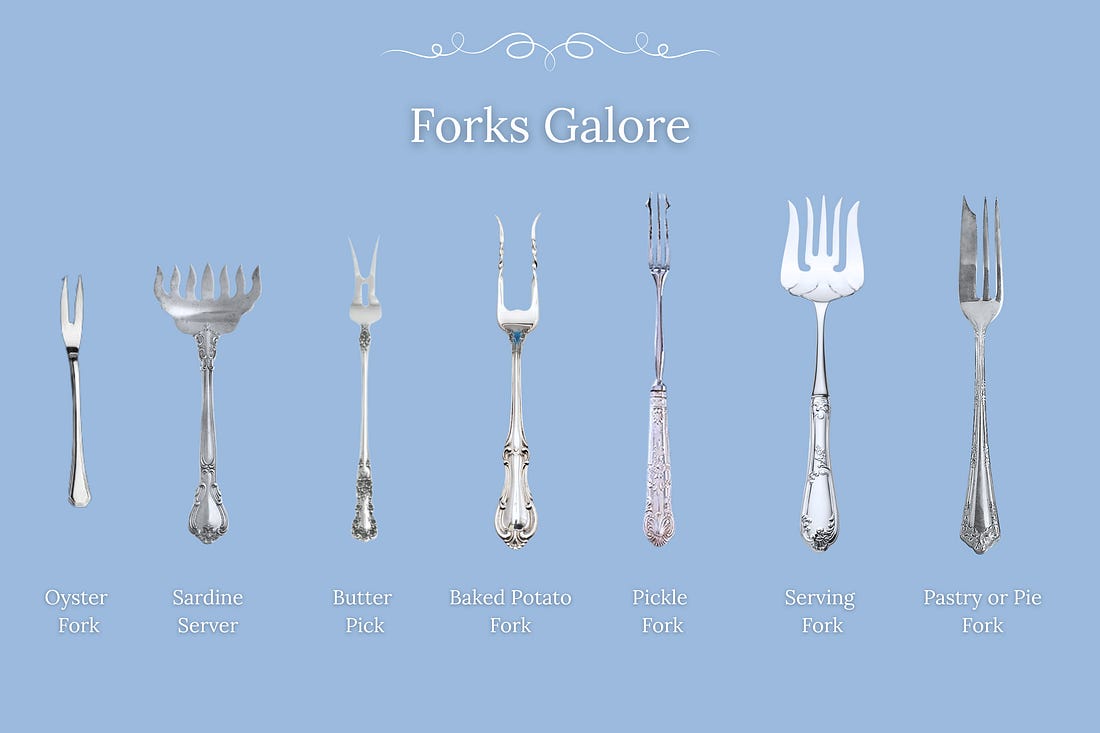
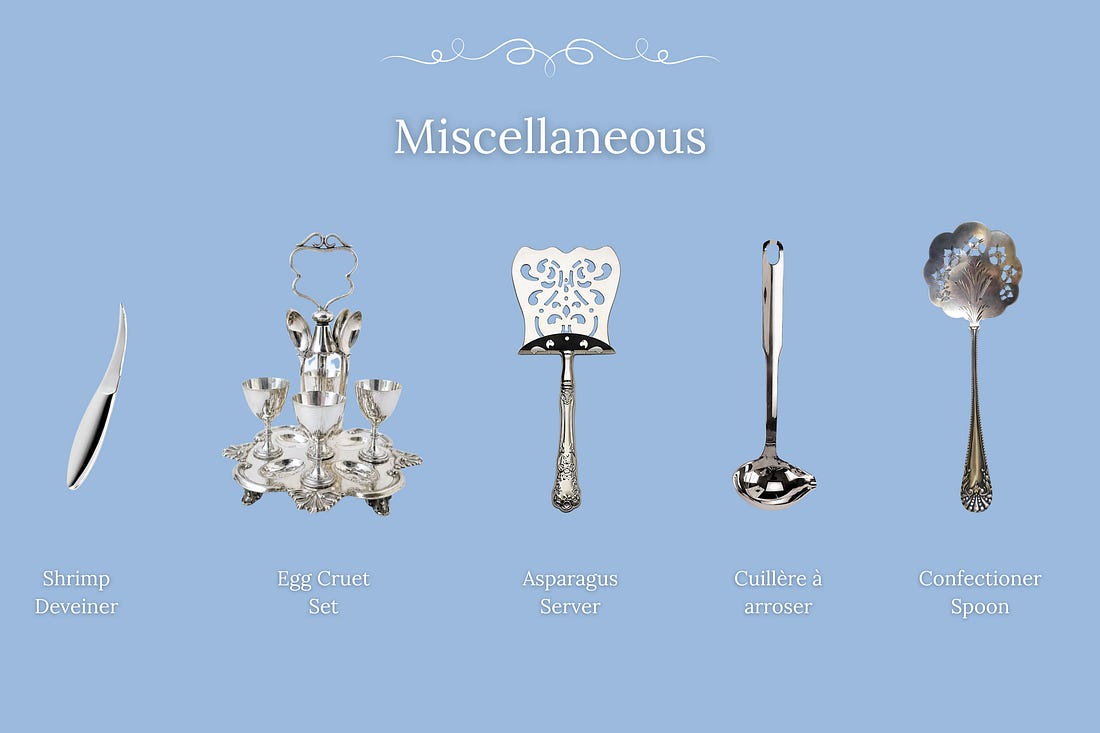
From cheese knives and specialty spoons, to forks and tongs, many serving utensils were originally designed for specific foods and occasions we don’t think twice about today. Let’s face it, in 2026, it’s pretty unrealistic to have a designated fork for each type of vegetable, or a certain spoon for a single tomato slice. However, during the Victorian era, dining at the table was a serious affair, with rules for nearly everything. The correct utensil wasn’t just about function, it was a reflection of wealth, social status, and an entire culture built around the art of dining etiquette. These specialty serving utensils are an incredible byproduct of a time when even the smallest details were intentionally thought through and recognized (the good ole days). I’ve rounded up a collection of these vintage and modern day finds so you can decide for YOURSELF which ones deserve a spot on your table. Some are practical, some are not, and all have a story to tell. You’ll find that each utensil is organized by category and contains fun graphics, because as a visual learner, the information will not process until I have a photo to look at! This also applies to cookbooks - I don’t make the rules. Now, let’s get into it!
KNIVES
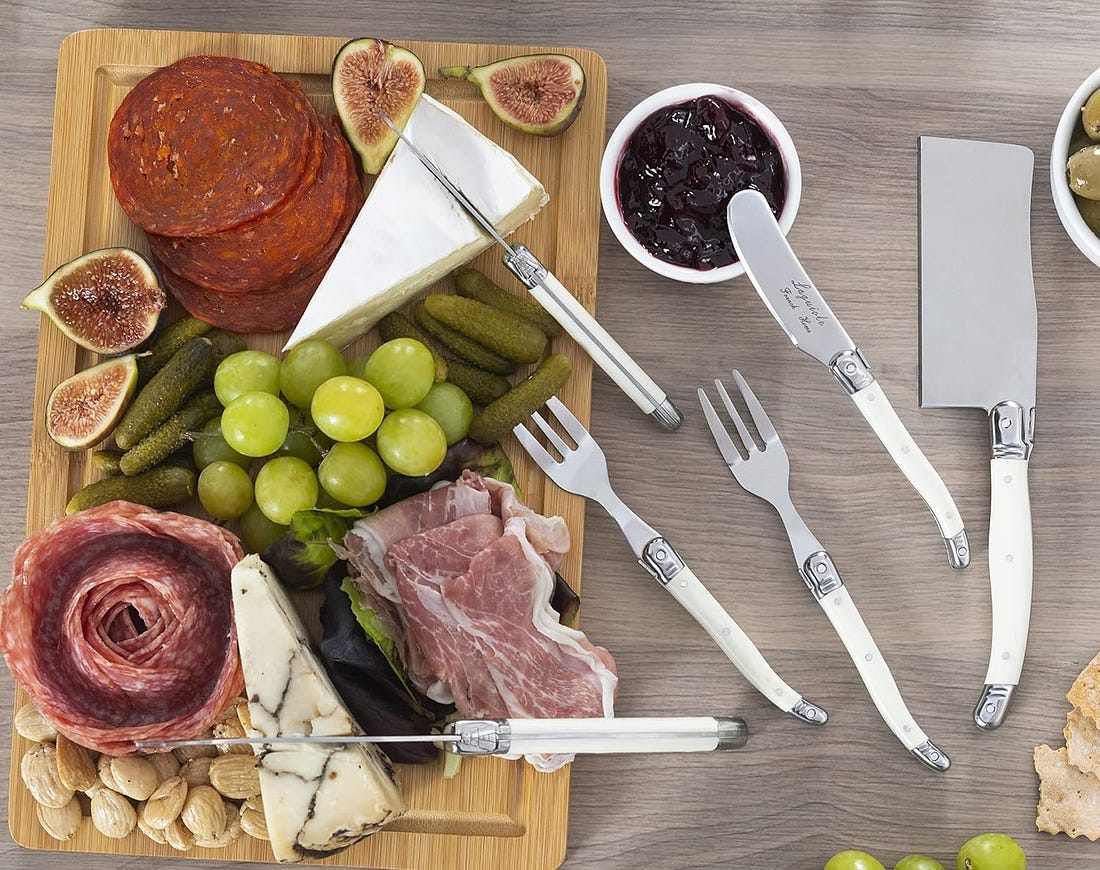
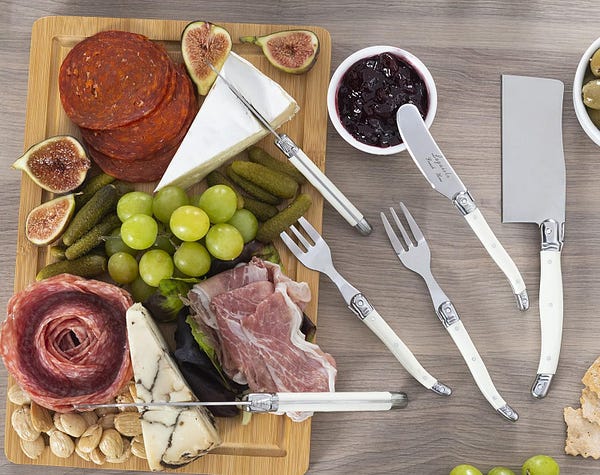
Cheese Fork: Useful for holding cheese in place while cutting or breaking it into clean crumbles without squishing, and for easily transferring pieces to a plate.
Cheese Cleaver: The wide, sturdy blade is perfect for cutting semi-hard to hard cheeses into clean slices or cubes.
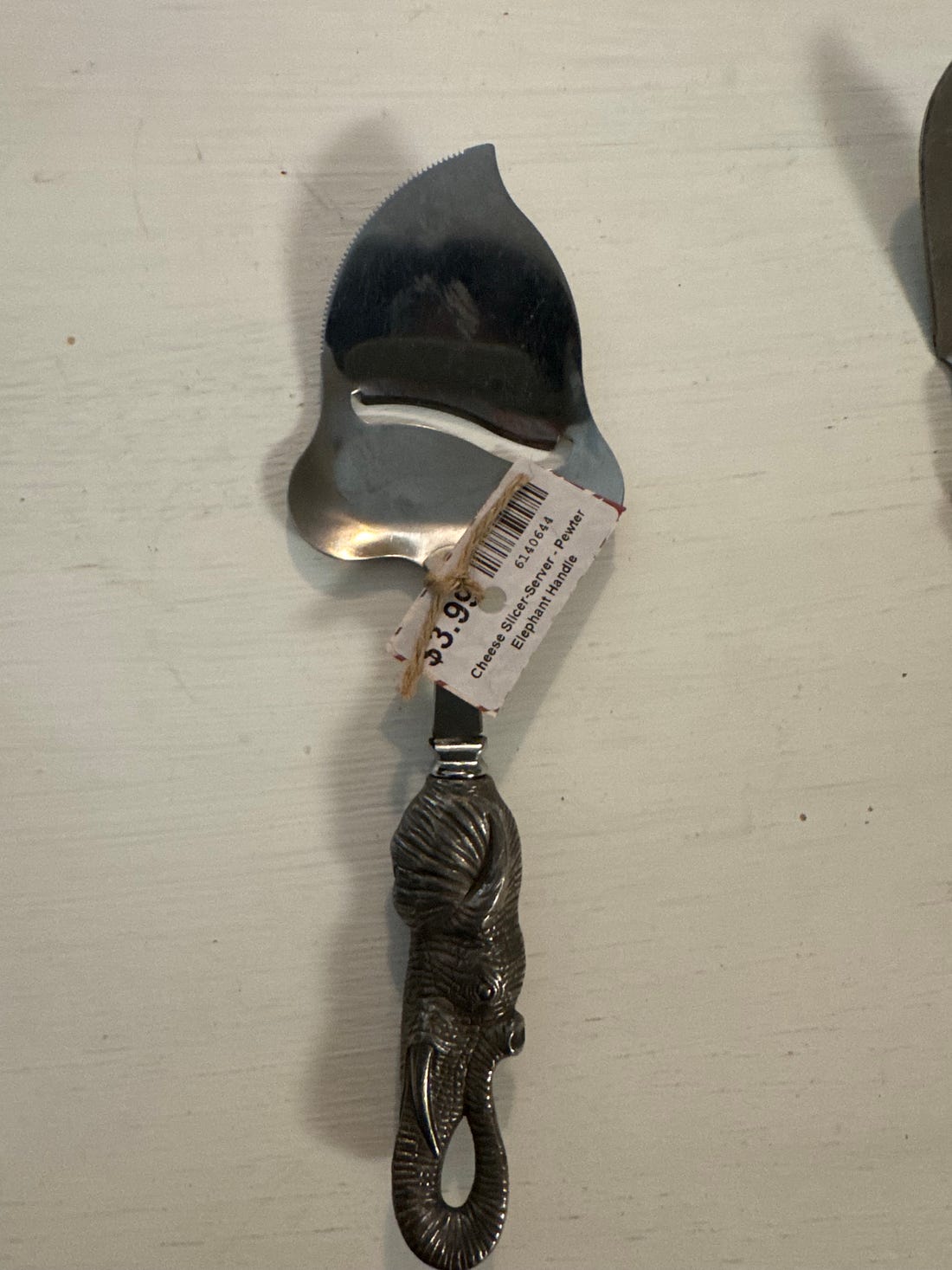
Cheese Slicer: Features a flat blade designed to shave thin, even slices of cheese.
Fork Tipped Spear: She’s very versatile! The pointed tip pierces and lifts bite-sized pieces of cheese in addition to helping crumble aged cheese, while the thin blade is particularly effective for slicing softer cheeses.
Perforated Knife: The holes in the blade help prevent soft, sticky cheeses from clinging. This one is soft cheeses’ best friend.
SPOONS
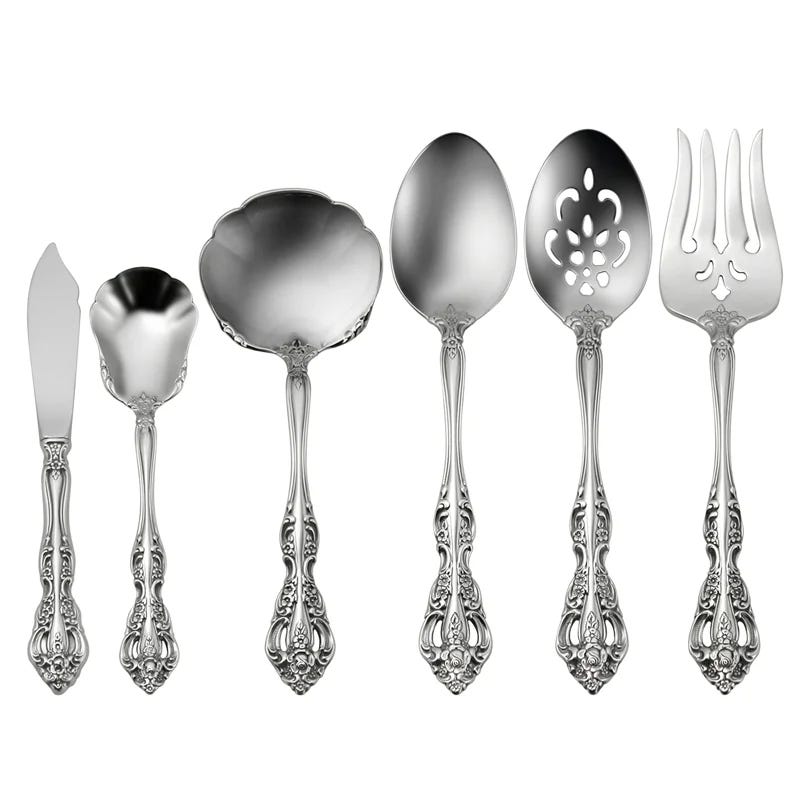
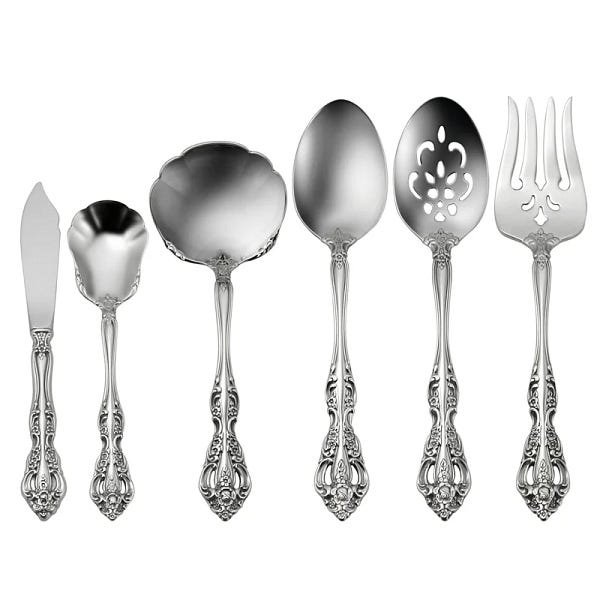
Tomato Server: Popular during the Victorian era, these wide, flat servers are perfect for lifting individual tomato slices with ease and a touch of elegance. The decorative perforations allow excess juices to drain away.
Ladle: Designed for serving liquids like soups, sauces, gravies, and punch. Its deep, rounded bowl and long handle make it easy to scoop and pour with minimal mess. They also vary in size depending on what you’re serving.
Slotted Spoon: Similar to the tomato server (but much more versatile and modernized) this works for serving any foods that contain natural juices. My personal favorite when serving olives or juicy greens, like collards.
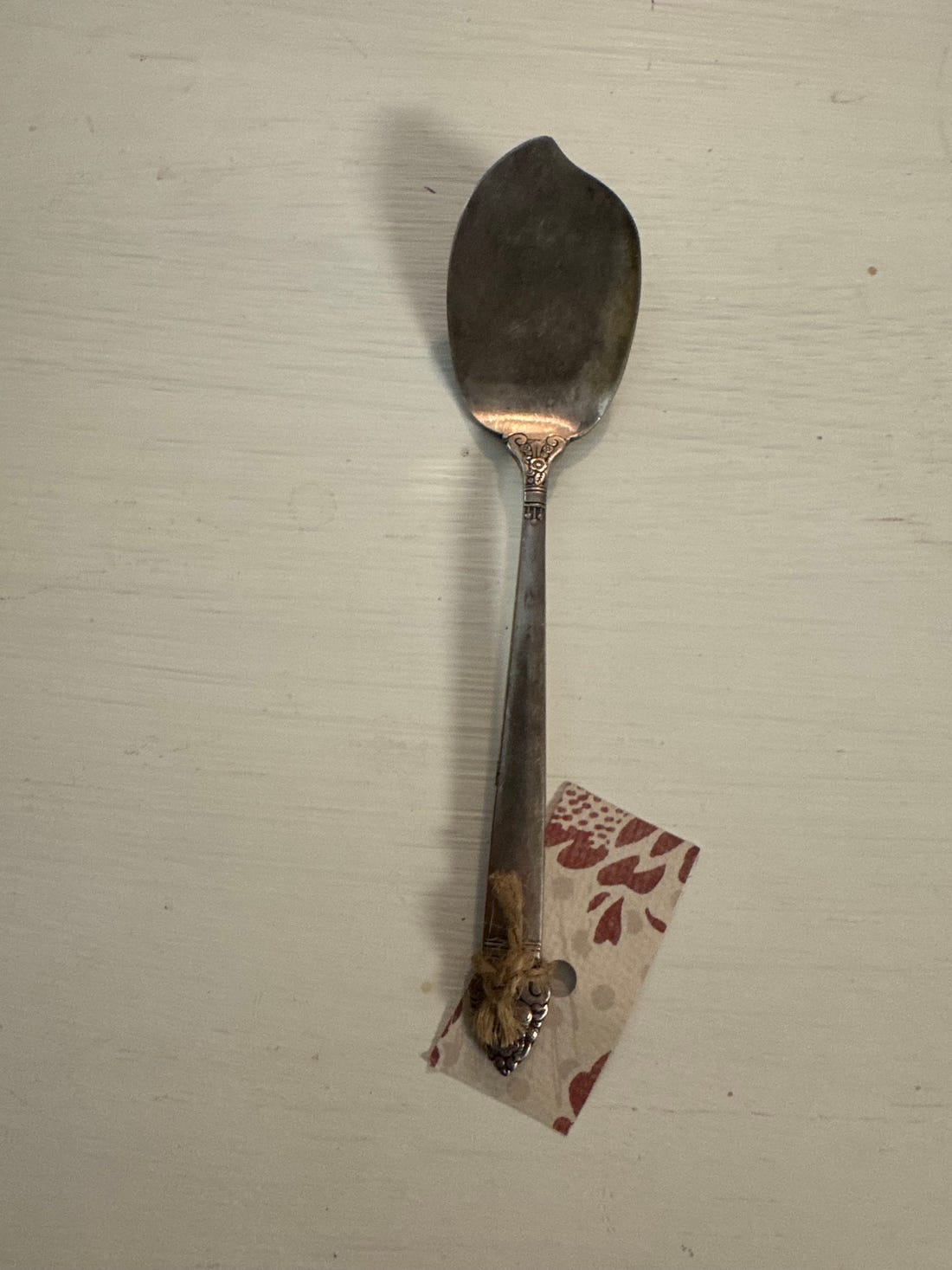
Jelly Server: Features a shallow, leaf-shape designed to slice and lift delicate jellies without them sliding off. The pointed tip is also helpful for piercing the jelly before lifting. These aren’t as common today, so you’ll likely have better luck sourcing a vintage one!
Sugar Spoon: Maybe the cutest of the serving spoons simply because miniature items are irresistible. These are usually deeper than a standard teaspoon, facilitating easier sugar serving.
Bar Spoon: Using one of these will make you feel like a professional mixologist. Perfect for stirring batched or single-serve cocktails with ice.
FORKS
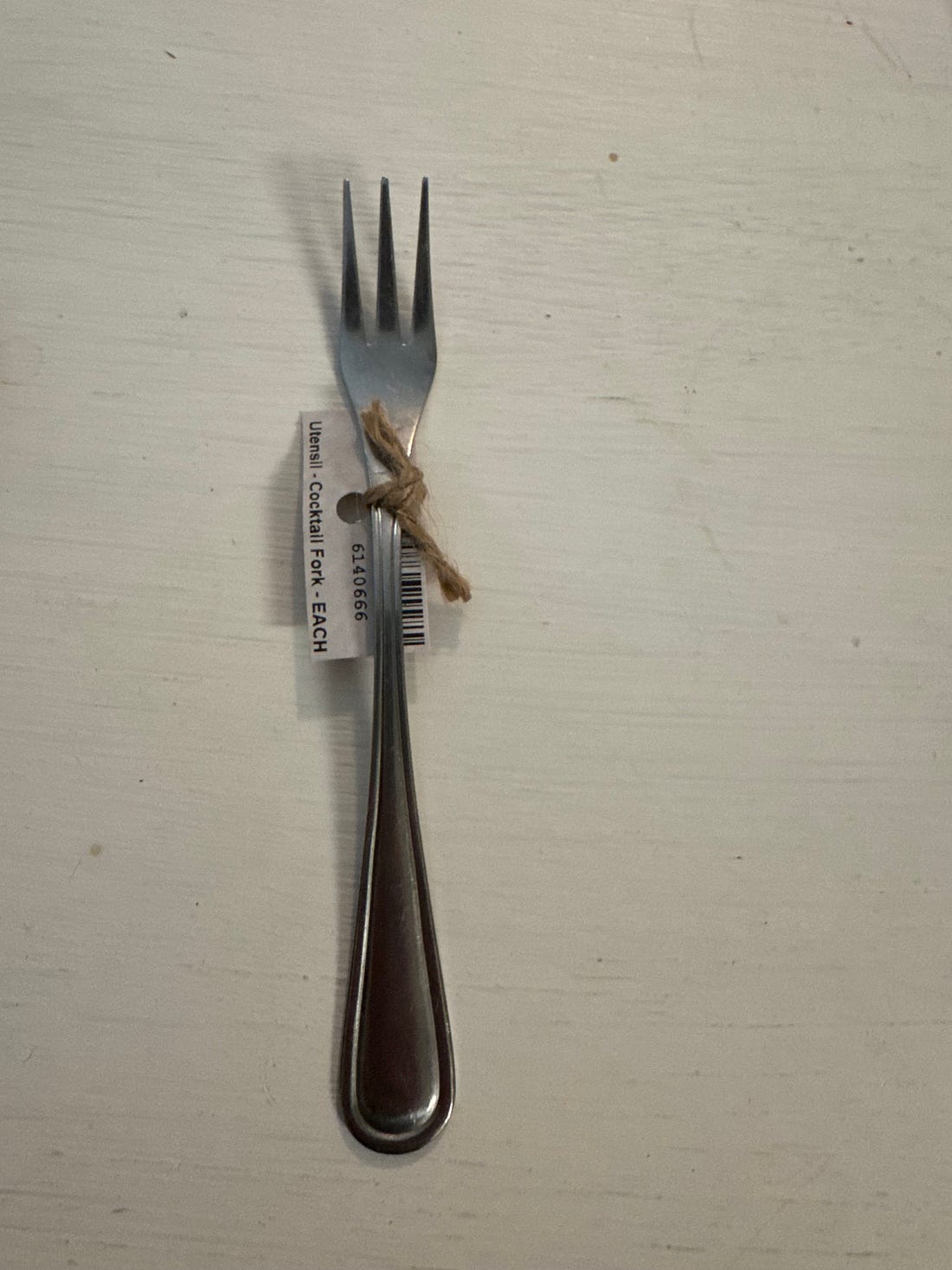
Oyster Fork: Also known as a cocktail or seafood fork, its narrow prongs make removing oyster meat easy and precise.
Sardine Server: Another find that you likely won’t find on Amazon, this short, wide tines are ideal for serving sardines, anchovies, and other small, delicate food.
Butter Pick: Perfectly designed to serve single pats of butter, and most importantly, you’ll wow your dinner guests with this level of detail!
Baked Potato Fork: The sharp, speared tines makes serving hot potatoes a breeze. These gorgeous, vintage designs can be found on Etsy and eBay.
Pickle Fork: Notice what’s on the edge of the fork? The outer spears grip pickles securely, while the long handle keeps your fingers out of the brine. Highly collectible, especially pieces from renowned makers like 1847 Rogers.
Serving Fork: The workhorse of the fork community. Large enough to serve thick slices of meat to hearty vegetables and more. You’ll reach for this again and again.
Pastry Fork: The outermost tine, traditionally the left one for right-handed users, is significantly wider and often notched like a knife blade. This is for cutting into the pastry with one hand while holding a dessert plate in the other. Efficient and oh, so graceful!
RANDOM BUT NECESSARY
Shrimp Deveiner: Designed to peel, devein, and even butterfly a shrimp in one quick and easy motion. As someone who’s always lived near the water and a seafood LOVER, this tool is an absolute staple.
Egg Cruet Set: I had to include these because do you DIE for this? Popular during the 1880’s to early 1900’s, these sets were designed for serving boiled eggs, typically including four to eight egg cups on a stand, matching spoons, and sometimes salt cellars for seasoning. Rose Dawson was absolutely eating her breakfast out of these aboard the Titanic.
Asparagus Server: Once considered a luxury, asparagus became a fashionable fixture of Victorian dining. Naturally, it inspired its own collection of specialized serving pieces. The curve on this server help keep the stalks from rolling around as you bring them from the platter to your plate. Fancy!
Cuillère à arroser: (Don’t ask me to pronounce it) A large, basting spoon used to scoop up fat, pan juices, stock, or butter and repeatedly baste it over meat, fish, or vegetables while they cook, hence the dip on one side of the spoon for easy pouring.
Confectioner Spoon: Before modern sifters, an ornate silver spoon did the job! Its flat surface holds the confectioners’ sugar, while the decorative perforations allow it to sift delicately over your favorite treats.
THINGS I THINK YOU NEED
Now that you’re thoroughly educated on serving utensils and their designated uses (and hopefully feeling inspired to start your own collection), I’m sharing a few of my favorite modern-day finds below. These pieces bring all the charm and elegance of their vintage counterparts while offering affordable options to elevate any dining experience.
This Laguiole set is absolutely stunning and would compliment any serving board. In my opinion, a cream and silver color-way is always a good idea. This set is also significantly cheaper on amazon as opposed to Sur La Table - YOU’RE WELCOME! This would also make a great gift! This post contains affiliate links, which means I may earn a commission from qualifying purchases at no additional cost to you.Also available in the most gorgeous tortoise pattern, featuring a few larger serving utensils that, in my opinion, every home needs.This gorgeous Oneida serving set is HALF OFF right now, run don’t walk. It includes everything you’d need for a foundational serving utensil collection with a timeless design, perfect for special occasions or every day use.These couldn’t be cheaper and more useful if they TRIED. I find myself using these weekly even when I’m only serving myself. Perfect for placing out with charcuterie boards, cocktail stations to easily grab garnishes, the list goes on.
I hope this article gave you a little piece of history and a whole lot of inspiration to add to your serving utensil collection. After all, these beautiful pieces are more than just something to collect; they’re an invitation to serve others, create memorable experiences, and make the people you love feel special. And isn’t that what it’s always been about?
With Gratitude,
Morgan at The Dainty Dish
The full guide · $14
What's That For? Your Serving Utensil Guide
$14
Ever found a gorgeous silver piece at an estate sale and thought, what on earth is that for? 32 serving pieces identified, what to serve with them today, a price cheat sheet so you never overpay, and how to keep it all shining.